










What Is a 510 Thread Battery? How It Works and What It Fits

A 510 thread battery is one of the most common power sources used with replaceable vape cartridges. Its modular design lets users connect a compatible cartridge to a reusable battery instead of replacing the entire device.
However, the word “510” describes the connection format—not a guarantee that every 510 battery will work correctly with every cartridge. Understanding the electrical contact, cartridge size, airflow, output, and activation method is essential when selecting a compatible setup.
Quick answer: A 510 thread battery is a typically rechargeable power unit designed to connect with a cartridge that uses a 510-style threaded connection. When activated, the battery sends electrical power to the cartridge’s heating element. Although many cartridges share this connection, complete compatibility also depends on physical fit, center-pin contact, airflow, resistance, and battery output.
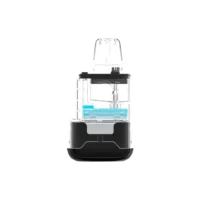
510 thread battery with a cartridge aligned above the threaded connector and a close-up of the battery socket](https://www.ciliconplus.com/wp-content/uploads/2026/07/what-is-a-510-thread-battery-blog-hero.png.png)
Key Takeaways
- A 510 system normally consists of a reusable battery and a separate, replaceable cartridge.
- The battery supplies power; the heating element is located inside the cartridge.
- Common activation methods include button activation and inhale activation.
- A matching thread does not automatically guarantee electrical or functional compatibility.
- Cartridge diameter, center-pin alignment, airflow, resistance, and output range should all be checked.
- Charging instructions and operating controls vary by model, so there is no universal click sequence, voltage, or charging time for every battery.
What Is a 510 Thread Battery?
A 510 thread battery is the power component in a two-piece cartridge system. It is designed to connect to a cartridge through a small threaded fitting and electrical contact.
The name “510” is commonly used for a connection often described as having ten threads spaced approximately 0.5 millimeters apart. In practice, it is better to treat 510 as an industry compatibility convention rather than a complete technical standard. Manufacturing tolerances, contact position, cartridge dimensions, and electrical requirements can still differ between products.
A typical 510 setup has two main components:
- A rechargeable or reusable 510 battery
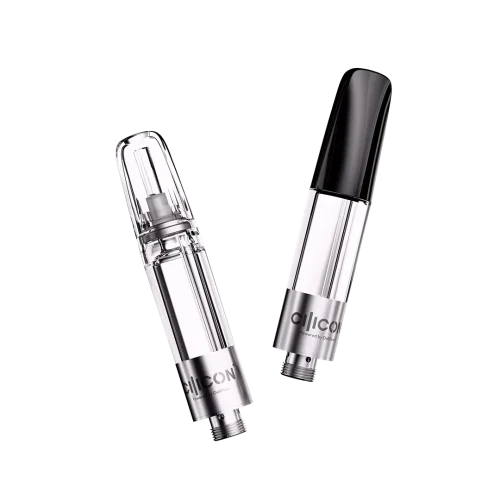
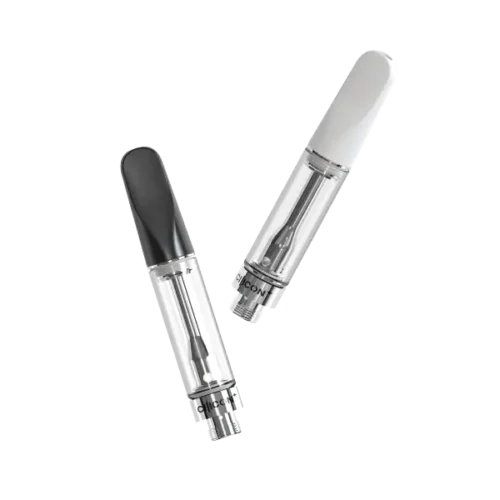
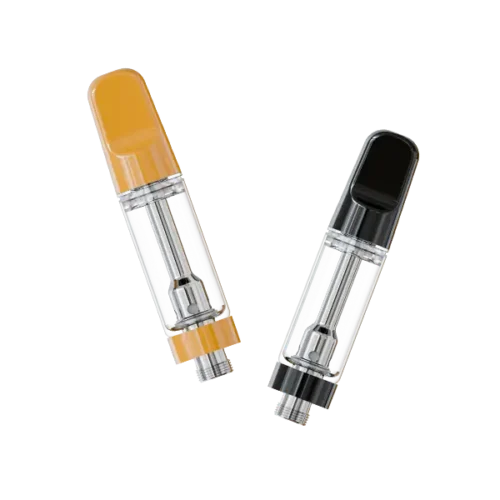
- A compatible replaceable cartridge containing the reservoir and heating element
This modular structure distinguishes it from an all-in-one device, where the battery, reservoir, airflow system, and heating element are integrated into one hardware platform.
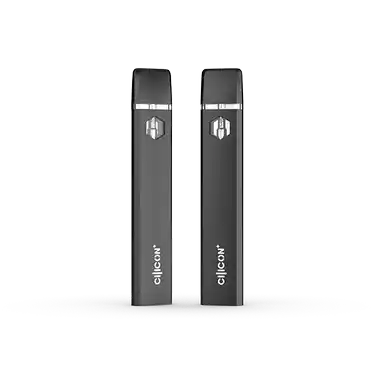
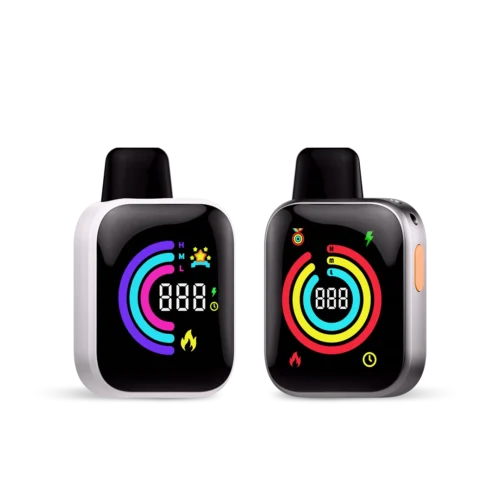
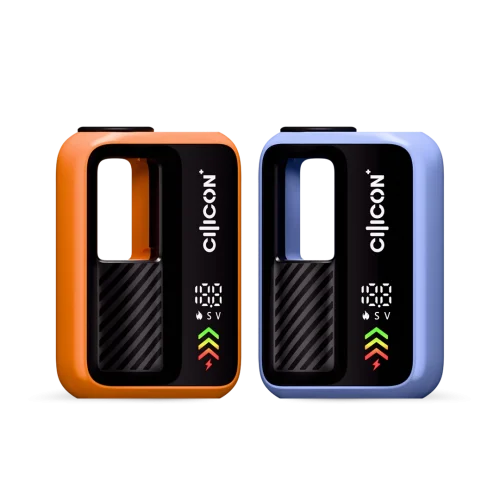
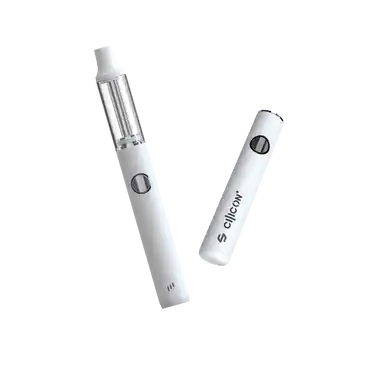
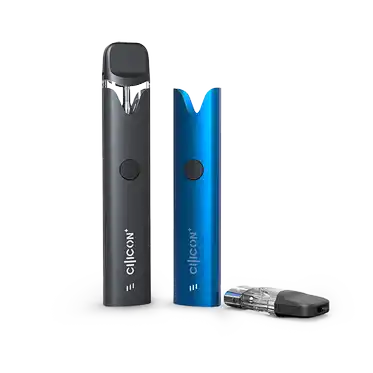
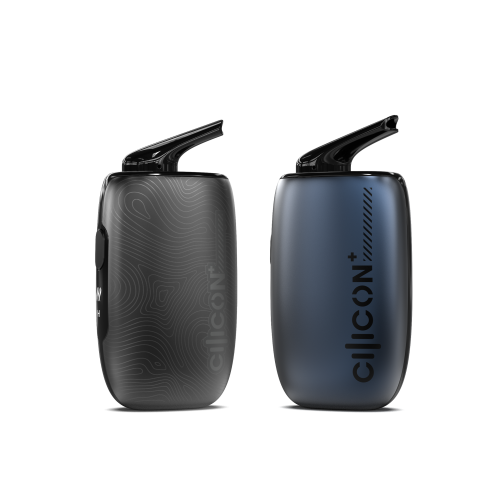
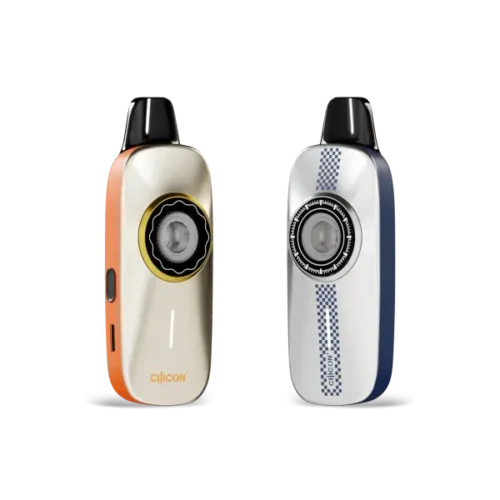
The term “510 vape battery” may describe a simple pen-shaped battery, a button-operated device, an inhale-activated battery, or a larger device with adjustable output and a display. The connection can be similar even when the designs and controls are very different.
How Does a 510 Thread Battery Work?
A 510 thread battery converts stored electrical energy into controlled power for the heating element inside a connected cartridge.
The basic operating sequence is:
- The cartridge connects to the battery.
The threaded fitting holds the two components together while their electrical contacts align. - The device is activated.
Activation may occur through a button, an airflow sensor, or both, depending on the model. - The battery delivers electrical output.
A control circuit manages the output according to the device’s design and selected settings. - The cartridge heating element receives power.
The heating element converts electrical energy into heat. - The device stops supplying power.
Output ends when the button is released, inhalation stops, or an operating limit is reached.
In simple terms, the energy path is:
Battery cell → control circuit → 510 contact → cartridge heating element
The battery does not determine performance by itself. The final result depends on the complete battery-and-cartridge system, including the cartridge’s resistance, heating structure, airflow, material, and intended output range.
For a closer look at the cartridge side of the system, see How Do 510 Carts Work?.
What Are the Main Parts of a 510 Battery?
The exact construction varies by model, but a 510 battery may contain the following components:
| Component | Purpose |
|---|---|
| Battery cell | Stores the electrical energy used by the device |
| Control circuit | Regulates activation, output, charging, and protection functions |
| 510 connector | Provides the mechanical connection to the cartridge |
| Center contact | Transfers electrical power between the battery and cartridge |
| Activation system | Uses a button, airflow sensor, or combined control method |
| Output control | Provides fixed or adjustable voltage or wattage, depending on the model |
| Charging interface | Allows the internal battery to be recharged |
| Indicator or display | Communicates operating, charging, or protection status |
Not every device includes every feature. A compact battery may use a single indicator light, while a more advanced device may include multiple output settings, a display, preheat controls, or additional status information.
What Does a 510 Thread Battery Fit?
A 510 thread battery is designed to connect with cartridges that use a compatible 510-style connection. It is not automatically compatible with every cartridge labeled “510.”
Before connecting a cartridge, check the following factors.
1. Threaded Connection
The cartridge should be designed for a 510 connection and should attach smoothly without being forced.
If the cartridge sits at an angle, feels unusually tight, or does not screw in evenly, stop. Forcing the connection can damage the threads or cause misalignment.
2. Center-Pin Contact
The center contacts on the battery and cartridge must meet correctly to complete the electrical circuit.
A cartridge may screw onto the battery but still fail to operate if the contacts do not align. Dirt, residue, physical damage, or differences in pin position can also interfere with the connection.
3. Cartridge Diameter and Physical Clearance
Some batteries leave the cartridge fully exposed. Others use a recessed or enclosed chamber.
A wide cartridge may have the correct thread but still be too large for the battery housing. Buyers should check both the cartridge diameter and the space available around the connector.
4. Airflow Position
The battery housing should not block the cartridge’s airflow openings.
This matters especially with recessed designs. A cartridge that fits mechanically may still perform poorly if its air inlets are covered after installation.
5. Cartridge Resistance
The cartridge’s resistance must fall within the operating range supported by the battery.
If the resistance is outside that range, the battery may not activate, may display a protection signal, or may operate inconsistently. Supported resistance ranges vary by model and should be verified in the product documentation.
6. Voltage or Wattage Requirements
The battery’s output must be appropriate for the connected cartridge.
A higher setting is not automatically better. Excessive output can create unnecessary heat or cause poor performance, while insufficient output may not power the heating element effectively. Use the cartridge supplier’s recommended range and the controls available on the specific battery.
7. Activation Method
Button-activated and inhale-activated batteries can both use a 510 connection, but the user experience is different.
An inhale-activated design also depends on airflow reaching the internal sensor correctly. A cartridge-and-battery combination should therefore be tested as a complete system rather than evaluated only by its thread.
Are 510 Batteries Universal?
Most 510 batteries are broadly compatible, but they are not completely universal. In typical use, a standard 510-thread cartridge will fit and work with most standard 510-thread batteries because they share the same connection format.
Exceptions can still occur. A cartridge may screw onto the battery but fail to make reliable electrical contact, fit poorly inside a recessed or enclosed battery, obstruct airflow, or operate outside the battery’s supported resistance or voltage range. Cartridge diameter, center-pin position, and proprietary hardware designs can also affect compatibility.
For a typical exposed-thread 510 battery and a standard cartridge, compatibility is usually straightforward. When using an enclosed battery, an unusually wide cartridge, an adjustable-power device, or unfamiliar hardware, check the dimensions and operating specifications first. Brands and wholesale buyers should sample-test the exact production battery-and-cartridge combination before placing a bulk order.
How to Check 510 Battery Compatibility
Use this quick checklist before pairing a battery and cartridge:
- Confirm that both products are identified as using a 510 connection.
- Check the cartridge diameter against the battery’s available clearance.
- Inspect the threads and center contacts for dirt or damage.
- Attach the cartridge gently and make sure it sits straight.
- Do not overtighten the connection.
- Confirm the cartridge resistance and recommended output range.
- Make sure the battery can provide the required setting.
- Check that the battery housing does not obstruct airflow.
- Review the activation and locking instructions for the battery model.
- Test the complete combination before ordering or deploying it at scale.
A connection that requires force, becomes unusually hot, or produces repeated protection signals should not continue to be used until the cause is identified.
CILICON’s current 510 thread cartridge collection and 510 battery collection can be reviewed together when evaluating a matched hardware system.
Common Types of 510 Thread Batteries
Pen-Style Batteries
Pen-style batteries use a narrow cylindrical body and are typically designed for portability and straightforward operation.
Their compact size can limit battery capacity or available controls, but it also makes them easy to carry and pair with similarly sized cartridges.
Button-Activated Batteries
A button-activated battery requires the user to press a control during operation.
Depending on the model, the same button may also control locking, output selection, preheat, or other features. The number and sequence of clicks are model-specific; always follow the device instructions.
Inhale-Activated Batteries
An inhale-activated battery uses an airflow sensor to detect a pressure change and start delivering power.
This creates a simpler interface without requiring the user to hold a button. Correct airflow and cartridge fit are especially important for this activation method.
Variable-Voltage or Variable-Power Batteries
These devices allow users to choose between two or more output levels.
Adjustable output can help one battery support cartridges with different electrical requirements, but the setting still needs to stay within the range recommended for the connected cartridge.
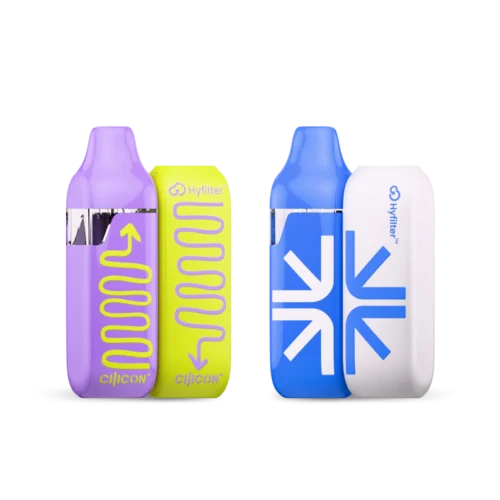
Enclosed or Concealed-Cartridge Batteries
An enclosed design places part or all of the cartridge inside the battery housing.
This can protect the cartridge and change the appearance of the device, but it creates additional diameter and airflow constraints. A cartridge can have the correct thread and still be too wide for the chamber.
510 Battery vs. Pod System vs. All-in-One Device
| Feature | 510 Battery System | Pod System | All-in-One Device |
| Main structure | Separate battery and cartridge | Battery used with a matching pod | Battery and reservoir integrated into one device |
| Connection | Common 510-style thread | Usually proprietary | Internal, not user-swappable |
| Cartridge choice | Multiple compatible cartridges may be available | Limited to the matching pod platform | Fixed hardware configuration |
| Hardware flexibility | High when compatibility is verified | Moderate to low | Low |
| Setup requirement | Battery and cartridge must be matched | Matching pod is required | Minimal component matching |
| Replacement | Cartridge can usually be replaced separately | Pod can usually be replaced | Entire device may need replacement |
A 510 system is useful when hardware flexibility and replaceable cartridges are priorities. A pod system may provide a more controlled ecosystem, while an all-in-one design reduces component matching by integrating the hardware.
No format is universally best. The appropriate choice depends on compatibility requirements, desired user experience, device size, customization, and applicable market rules.
How to Choose a 510 Thread Battery
For individual users, focus on:
- Verified cartridge compatibility
- Battery size and cartridge clearance
- Button or inhale activation
- Fixed or adjustable output
- Battery capacity
- Charging interface
- Clear operating instructions
- Available product support
Battery capacity is normally expressed in milliamp-hours, or mAh. A larger mAh value generally indicates more stored capacity, but it does not tell you the battery’s output power, cartridge compatibility, build quality, or expected service life by itself.
For brands and wholesale buyers, also confirm:
- Cartridge dimensions and resistance
- Intended output range
- Required activation method
- Battery and cartridge airflow interaction
- Charging specifications
- Housing and branding requirements
- Sample-testing procedures
- Quality-control documentation
- Target-market compliance requirements
Basic 510 Battery Safety and Care
A 510 battery should be treated as an electrical device, not as a passive cartridge holder.
For safer use:
- Follow the battery manufacturer’s operating and charging instructions.
- Use the supplied or specifically recommended charging equipment.
- Do not use damaged cables, loose connectors, or improvised power sources.
- Keep the connector and charging port dry.
- Do not immerse the battery in liquid.
- Stop using a battery that is swollen, cracked, leaking, or unusually hot.
- Keep batteries and related products away from children.
- Do not attempt to open, puncture, rewire, or bypass the battery.
The U.S. FDA advises users to protect vape batteries from extreme temperatures, use the recommended charging equipment, and replace damaged batteries. The U.S. Consumer Product Safety Commission also identifies overheating, fire, electrical shock, and thermal burns among potential battery and charger hazards.
Charging time depends on the battery model, capacity, charging current, temperature, and remaining charge. For a focused explanation, read How Long Does a 510 Battery Take to Charge?.
If a connected device does not activate, avoid improvised wiring or external power methods. Use the steps in How to Troubleshoot 510 Thread Batteries.
Common 510 Battery Mistakes
Assuming Every 510 Cartridge Is Compatible
The thread is only one part of compatibility. Electrical contact, output, diameter, resistance, and airflow must also match.
Overtightening the Cartridge
Overtightening can damage the threads, stress the contact, or make the cartridge difficult to remove. Attach it only until it is secure.
Choosing the Highest Available Output
More power does not necessarily improve performance. Use an output suitable for the connected cartridge.
Treating mAh as a Power Rating
Milliamp-hours describe battery capacity. They do not directly describe voltage, wattage, heating performance, or cartridge compatibility.
Forcing a Cartridge Into an Enclosed Battery
Check the cartridge diameter and chamber clearance before installation. A correct thread does not guarantee a correct physical fit.
Using Unverified Charging Equipment
Charging requirements vary between products. Use the equipment and input specification recommended for the battery model.
Frequently Asked Questions
What does “510” mean on a battery?
The term “510” commonly refers to the threaded connection used between a battery and cartridge. It is often described as ten threads spaced approximately 0.5 millimeters apart. However, the label does not define every physical or electrical characteristic, so products carrying the same term may still differ in fit and performance.
Can any 510 cartridge be used with any 510 battery?
No. A cartridge may screw onto a battery but still be incompatible because of its diameter, center-pin position, airflow, resistance, or required output. Confirm both products’ specifications and avoid forcing a connection that does not fit smoothly.
How do you turn on a 510 thread battery?
It depends on the model. Some batteries activate automatically during inhalation, while others use a button and may include a locking sequence. There is no universal number of clicks for all 510 batteries. Check the instructions supplied with the specific device.
What voltage should a 510 battery use?
There is no single voltage suitable for every cartridge. The appropriate setting depends on the cartridge resistance, heating element, material, and manufacturer’s intended operating range. Begin only within the documented range and avoid assuming that a higher setting will perform better.
Is a 510 battery the same as a vape pen?
Not exactly. Some 510 batteries have a pen-shaped body and may be called vape pens, but “510” primarily describes the connection system. A 510 battery can also use a box-shaped, concealed-cartridge, or screen-equipped design.
Can one 510 battery be used with different cartridges?
It may be possible if each cartridge is mechanically and electrically compatible with the battery. Check the thread, diameter, center contact, airflow, resistance, and output requirements every time a different cartridge platform is introduced.
When should a 510 battery be replaced?
Consider replacing the battery if it cannot hold a charge, delivers unstable output, repeatedly enters protection mode, becomes unusually hot, or shows swelling, cracking, leakage, or other physical damage. Service life varies, so condition and performance are more useful than a universal replacement date.
Final Answer
A 510 thread battery is a reusable power unit designed for a modular battery-and-cartridge system. It supplies controlled electrical output to the heating element inside a compatible cartridge and may use button activation, inhale activation, or both.
Its greatest advantage is hardware flexibility, but the 510 connection alone does not make every component universal. Reliable compatibility requires the correct thread, physical clearance, center contact, airflow, resistance, output, and operating instructions.
To compare available hardware, explore CILICON’s 510 thread battery collection, FLEXA battery, and 510 thread cartridge collection. Brands evaluating a complete battery-and-cartridge system can also contact CILICON to discuss specifications and sample validation.
This article discusses hardware only. Products should be used only by adults and in accordance with applicable laws, product instructions, and market requirements.

Written by:
Ethan Parker
Hello, I’m Ethan, a content marketing specialist at CILICON, a top-tier cannabis vape manufacturer. My goal extends beyond merely promoting products; it is more importantly about helping people understand and learn about cannabis and vaping, providing them with relevant knowledge and information. Having graduated from University of North Carolina, I cultivated a strong passion and interest in nicotine, cannabinoids, and vape products. At CILICON, I integrate this knowledge and enthusiasm into content creation, sharing interesting and valuable insights.
