









Live Resin vs. Live Rosin vs. Distillate: What Is the Difference?
Live resin, live rosin, and distillate are three cannabis concentrate categories commonly used in vape cartridges, all-in-one devices, and other product formats.
Although the terms are sometimes used as indicators of quality, they primarily describe different production and refinement methods. They do not automatically guarantee potency, purity, safety, flavor, or device performance.
The main differences between live resin, live rosin, and distillate involve:
- Starting material
- Extraction or refinement method
- Retained aromatic compounds
- Formulation consistency
- Testing requirements
- Vape hardware compatibility
This guide explains how each concentrate is generally produced, how the three categories compare, and what adult consumers and vape brands should verify before choosing an oil or matching it with vape hardware.
Product availability, labeling rules, and regulatory requirements vary by jurisdiction.
Quick Answer
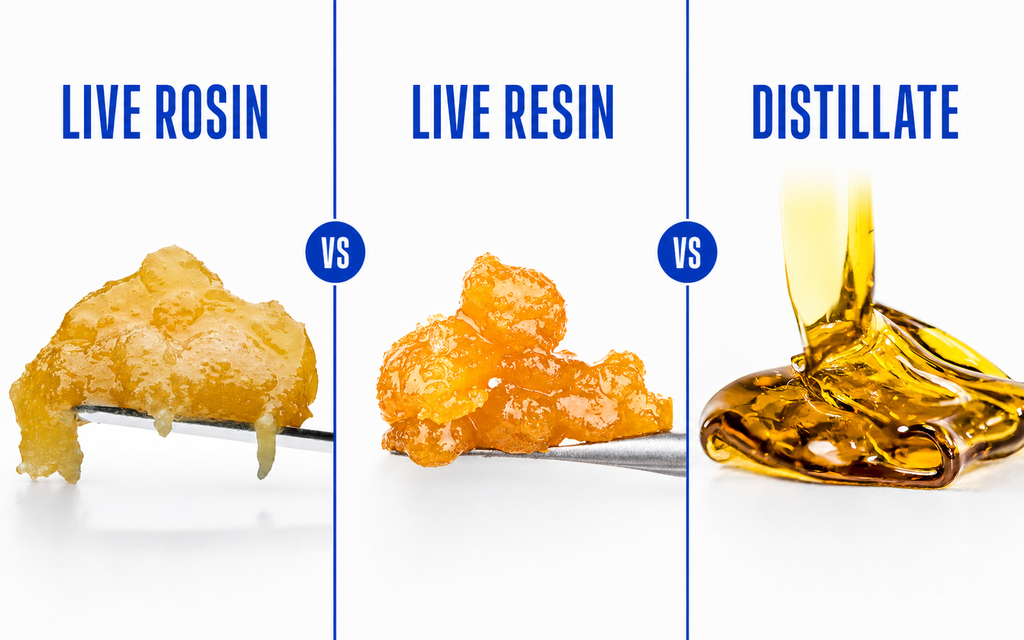
The main difference between live resin, live rosin, and distillate is how each concentrate is made.
Live resin usually starts with plant material preserved shortly after harvest, commonly through freezing, and uses solvent-based extraction to retain more of the source material’s aromatic profile.
Live rosin is generally made by mechanically separating trichome material from fresh-frozen plants and pressing it with controlled heat and pressure, without using hydrocarbon solvents during the pressing process.
Distillate is an extensively refined cannabinoid fraction produced through additional purification and distillation. It often provides a more neutral and standardized formulation input.
None of the three is universally better. The correct choice depends on the finished formulation, intended product positioning, test results, regulatory requirements, and compatibility with the selected vape hardware.
Key Takeaways
- Production method is the main difference. Live resin commonly uses hydrocarbon extraction, live rosin uses mechanical separation and pressing, and distillate undergoes additional refinement and distillation.
- The category name does not determine potency. Cannabinoid and terpene concentrations vary by formulation and batch.
- Solventless does not automatically mean safer or purer. Testing, handling, storage, formulation, and hardware performance still affect finished-product quality.
- Distillate is not automatically stronger. Actual potency must be confirmed through the product label and applicable laboratory results.
- Vape hardware must be tested with the exact oil. The formulation, intake design, heating system, airflow, seals, battery, and storage conditions function as one system.
Live Resin vs. Live Rosin vs. Distillate at a Glance
| Factor | Live Resin | Live Rosin | Distillate |
|---|---|---|---|
| Typical starting material | Fresh-frozen plant material | Hash or trichome material derived from fresh-frozen plants | Previously extracted oil; original feedstock can vary |
| Core process | Solvent-based extraction, commonly using hydrocarbons | Mechanical separation followed by heat and pressure | Extraction followed by further refinement and distillation |
| Hydrocarbon solvent use | Common during extraction | Not used during the pressing process | Depends on how the original crude extract was produced |
| Aromatic profile | Often formulated to retain more source-derived aroma | Often valued for a source-specific aromatic profile | Usually relatively neutral after refinement; terpenes may be added |
| Composition | Varies according to source material, batch, and process | Varies according to input material and pressing conditions | Often contains a more targeted cannabinoid fraction |
| Potency | Cannot be determined from the category name | Cannot be determined from the category name | May be highly concentrated, but potency is not guaranteed |
| Common positioning | Flavor and source-profile retention | Solventless processing and source profile | Refined and relatively neutral formulation input |
| Hardware consideration | Batch variability and oil behavior require testing | Thermal behavior and formulation require careful matching | May be easier to formulate consistently, but still requires testing |
| What the label does not guarantee | Potency, safety, residual-solvent results, or compatibility | Purity, safety, potency, or compatibility | Potency, ingredients, safety, or compatibility |
These are common production patterns rather than universal specifications.
A finished product should be evaluated using its formulation details, ingredient disclosure, manufacturer documentation, batch-specific laboratory results, and intended application.
What Is Live Resin?
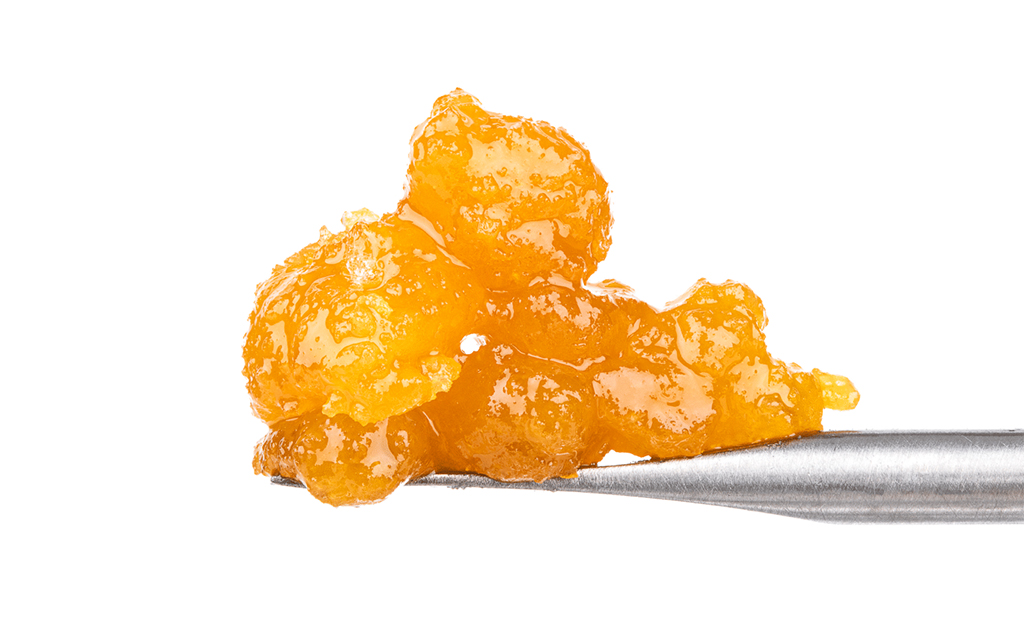
Live resin is a concentrate generally produced from plant material preserved shortly after harvest, most commonly through freezing.
Unlike conventional processing, which may involve drying and curing the plant material before extraction, live resin production is intended to preserve more of the volatile compounds associated with the source material’s aroma.
How Is Live Resin Made?
Live resin commonly uses solvent-based extraction involving hydrocarbons such as butane or propane.
This type of extraction should only be performed in appropriately licensed, engineered, and code-compliant industrial facilities.
A review of cannabis concentrate production and research limitations classifies live resin among products created through solvent-based extraction.
The final composition can be affected by:
- Source material
- Harvest timing
- Freezing and storage conditions
- Extraction method
- Temperature and pressure
- Post-extraction processing
- Formulation
- Packaging and storage
The term “live” usually refers to plant material preserved soon after harvest before extraction. It does not mean that the finished oil is raw, unprocessed, automatically full spectrum, or safer than another concentrate.
What Is Live Rosin?
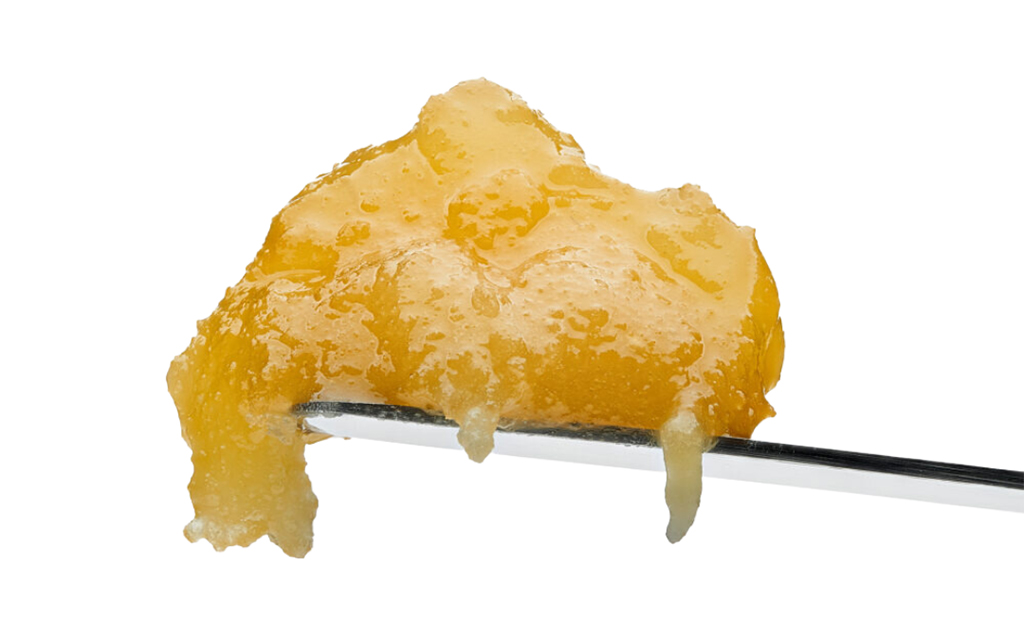
Live rosin is a solventless concentrate generally made from hash or trichome material derived from fresh-frozen plants.
The trichome material is commonly separated using ice water, dried, and then pressed using controlled heat and pressure.
How Is Live Rosin Made?
The NIH-hosted review of cannabis extraction methods describes rosin extraction as a process that uses compression and heat to obtain oil.
Because the pressing process does not rely on hydrocarbons, live rosin is commonly marketed as a solventless concentrate.
However, solventless is only a description of the production method. It is not a complete quality or safety assessment.
Finished-product quality can still depend on:
- Source-material quality
- Sanitation and handling
- Drying conditions
- Pressing temperature and pressure
- Storage conditions
- Formulation stability
- Batch testing
- Packaging
- Device compatibility
Live rosin should also be distinguished from conventional rosin.
Live rosin is generally made from material derived from fresh-frozen plants, while conventional rosin may be pressed from dried flower or cured hash.
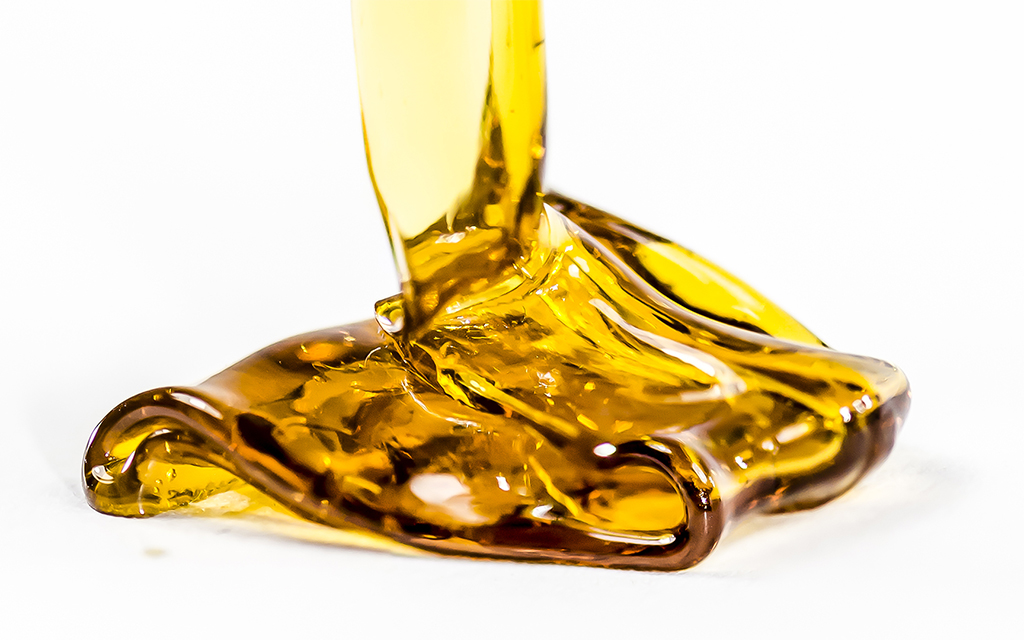
What Is Distillate?
Distillate is a refined cannabinoid product created by further processing an extracted oil and separating selected components through distillation.
A clinical framework for evaluating cannabis products describes distillate as crude extract that undergoes extensive refinement and distillation.
Unlike live resin and live rosin, the term “distillate” primarily describes a refinement stage rather than a specific fresh-frozen starting material.
How Is Distillate Made?
The production process generally begins with a previously extracted oil. The oil then undergoes additional purification and distillation to produce a more targeted cannabinoid fraction.
This refinement removes many compounds found in the original extract, often creating a material with a relatively neutral aroma.
Depending on the formulation, manufacturers may later add:
- Cannabis-derived terpenes
- Botanical terpenes
- Other legally permitted ingredients
Ingredient and labeling requirements vary by market.
Distillate is not automatically stronger, safer, cheaper, or compatible with every vape device. The finished product must be evaluated based on its actual cannabinoid content, ingredients, contaminant results, formulation, and intended application.
Live Resin vs. Live Rosin
Live resin and live rosin are both commonly associated with plant material preserved soon after harvest. They may be selected when retaining more of the source material’s aromatic profile is an important product objective.
The primary difference is the production method.
- Live resin normally uses solvent-based extraction.
- Live rosin uses mechanical separation followed by heat and pressure.
Live rosin may be the more logical starting point when solventless production is a central product requirement.
Live resin may be considered when a brand wants a source-derived aromatic profile created through a controlled solvent-based extraction process.
Neither category guarantees:
- A specific terpene percentage
- A specific cannabinoid concentration
- Better flavor
- Greater potency
- Higher purity
- Better hardware performance
Those characteristics depend on the actual plant material, production conditions, formulation, testing, packaging, and storage.
Live Resin vs. Distillate
Live resin production generally focuses on retaining more of the source material’s aromatic profile.
Distillate production involves additional separation and refinement, usually creating a more neutral and targeted cannabinoid input.
From a formulation perspective:
- Live resin may offer a more source-specific aromatic profile.
- Distillate may provide a more neutral base for controlled formulation.
- Live resin can show greater variation between batches.
- Distillate may support tighter formulation specifications when properly controlled.
However, finished-product consistency still depends on supplier specifications, batch tolerances, ingredients, formulation procedures, testing, and storage.
For a more detailed commercial comparison, read CILICON’s guide to live resin vs. distillate for vape products.
Live Rosin vs. Distillate
Live rosin may be selected when solventless processing and source-specific aromatic character are central to the product brief.
Distillate may be evaluated when a more highly refined, relatively neutral, and tightly specified cannabinoid input is required.
The comparison should not be simplified to:
- Natural versus artificial
- Strong versus weak
- Safe versus unsafe
- Premium versus low quality
Live rosin is still a processed concentrate, while distillate can be formulated in many different ways.
Product-specific documentation is required to compare the two accurately.
Which Is More Potent?
The category name alone cannot determine potency.
Although distillate is often highly concentrated, it is not accurate to assume that every distillate product is stronger than every live resin or live rosin product.
Actual potency depends on:
- Cannabinoid concentration
- Final formulation
- Added ingredients
- Batch variation
- Serving size
- Device delivery
- Testing methodology
Consumers and brands should review the finished product’s label and applicable batch-specific laboratory results instead of relying on the words “live resin,” “live rosin,” or “distillate.”
Which Has More Flavor?
Live resin and live rosin are commonly positioned around source-derived aromatic character.
Distillate is usually more neutral after refinement, although terpenes or other permitted flavor-related ingredients may be added during formulation.
However, flavor cannot be accurately ranked by category alone.
The finished sensory profile depends on:
- Source material
- Terpene composition
- Extraction or pressing conditions
- Refinement level
- Added ingredients
- Storage conditions
- Heating performance
- Device airflow
A poorly matched heating system can change how even a carefully formulated oil performs.
Which Is More Expensive?
There is no universal price ranking.
Live rosin is often positioned as a premium category because of its input requirements, processing method, potential yield limitations, and product positioning.
Live resin may also carry premium pricing when source-profile retention and specialized extraction are emphasized.
Distillate is frequently evaluated for standardized and scalable formulations, but its price still depends on the cannabinoid specification, supplier, volume, market, and regulatory environment.
For an accurate comparison, review:
- Current supplier pricing
- Package size
- Cannabinoid specification
- Batch volume
- Source material
- Testing costs
- Market and jurisdiction
- Date of quotation
What Should You Verify Before Comparing Concentrates?
Instead of relying on a generic category ranking, review the following evidence:
- Product label
- Ingredient disclosure
- Batch-specific Certificate of Analysis
- Cannabinoid results
- Terpene results
- Residual-solvent results
- Pesticide results
- Heavy-metal results
- Microbial results
- Manufacturer documentation
- Storage instructions
- Device instructions
- Current market pricing
For example, the California Department of Cannabis Control requires licensed testing laboratories to report batch results on a Certificate of Analysis covering cannabinoids, terpenes, residual solvents, pesticides, heavy metals, microbial impurities, and other testing categories.
California’s requirements should not be treated as a universal U.S. standard. Testing and documentation requirements differ across jurisdictions.
Which Concentrate Should You Choose?
There is no universal winner.
The best starting point depends on the intended product position, formulation specification, target market, and hardware requirements.
| Product Priority | Logical Starting Point | What to Verify |
|---|---|---|
| Retaining more source-derived aroma | Live resin or live rosin | Batch composition, stability, storage, and finished sensory profile |
| Solventless product positioning | Live rosin | Source material, process documentation, COA, and batch consistency |
| Relatively neutral formulation base | Distillate | Added ingredients, cannabinoid specification, and labeling requirements |
| Tightly controlled large-batch formulation | Distillate may be evaluated | Feedstock controls, batch tolerances, formulation, and device testing |
| Premium source-profile positioning | Live resin or live rosin | Supply consistency, sensory targets, testing, and packaging stability |
| Vape cartridge or AIO development | Any properly formulated category | Exact oil-to-hardware compatibility |
Live resin or live rosin may be logical starting points when source-derived aroma is central to the product brief.
Distillate may be considered when a more highly refined and relatively neutral formulation input is required.
In every case, repeatable finished-product performance depends on specifications, process controls, testing, storage, and hardware validation.
Which Is Better for Vape Carts and AIO Devices?
No extract category is automatically best for a vape cartridge or all-in-one device.
The correct choice depends on how the exact oil formulation interacts with the complete hardware system, including:
- Reservoir
- Intake openings
- Heating core
- Airflow path
- Seals
- Oil-contact materials
- Battery
- Power profile
- Filling method
- Storage conditions
A cartridge that performs well with one distillate formulation may not perform the same way with another distillate formulation. The same principle applies to live resin and live rosin.
1. Validate the Exact Formulation
Do not test a cartridge with a generic oil sample and assume that every oil within the same concentrate category will behave identically.
Validation should use the intended production formulation and representative batches.
2. Evaluate Oil Behavior
Review the oil’s behavior under the expected filling, transport, storage, and use conditions.
Testing may include:
- Flow behavior
- Wicking
- Separation
- Stability
- Temperature sensitivity
- Batch variation
3. Confirm Heating-System Compatibility
The heating core, intake design, airflow, and power profile should work together as one system.
Brands should not rely on a universal voltage, resistance, or power recommendation for every formulation.
4. Test Materials and Seals
Evaluate the complete oil-contact system, including:
- Reservoir material
- Seals
- Airway
- Heating components
- Mouthpiece
- Internal adhesives or joining systems, where applicable
5. Conduct Leak and Clog Testing
Filled samples should be tested across the intended product lifecycle and under representative environmental conditions.
Testing should evaluate:
- Leakage
- Clogging
- Wicking consistency
- Heating consistency
- Oil separation
- Storage stability
- Performance across batches
6. Confirm Packaging and Compliance Requirements
Before scale-up, verify:
- Filling procedure
- Capping procedure
- Package compatibility
- Labeling requirements
- Testing requirements
- Transportation conditions
- Target-market regulations
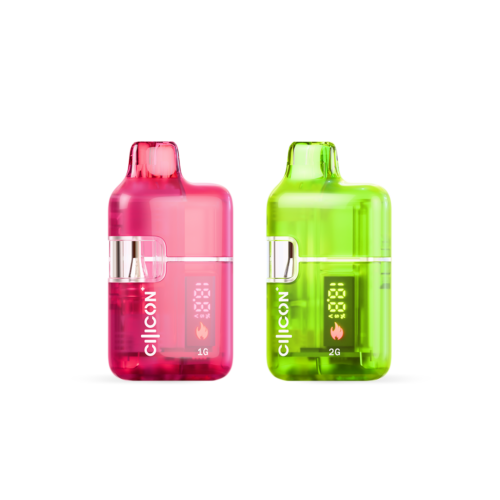
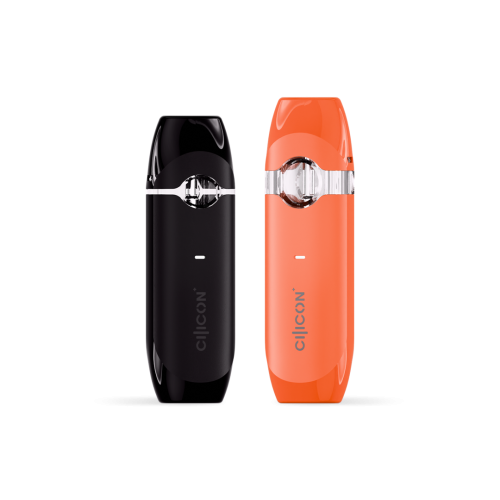
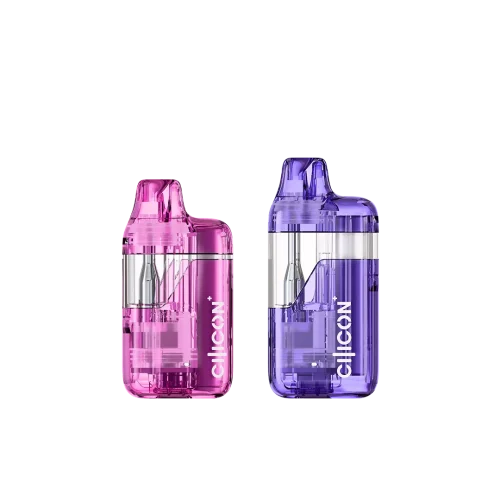
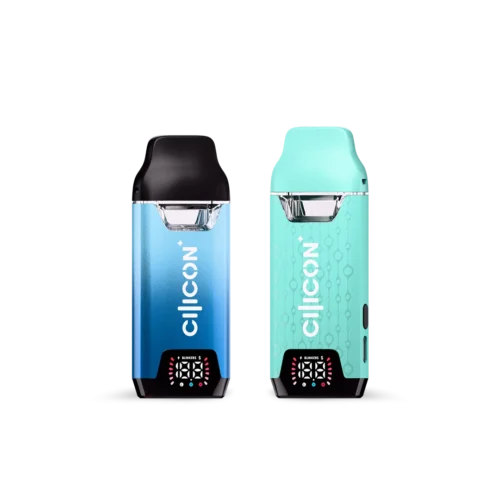
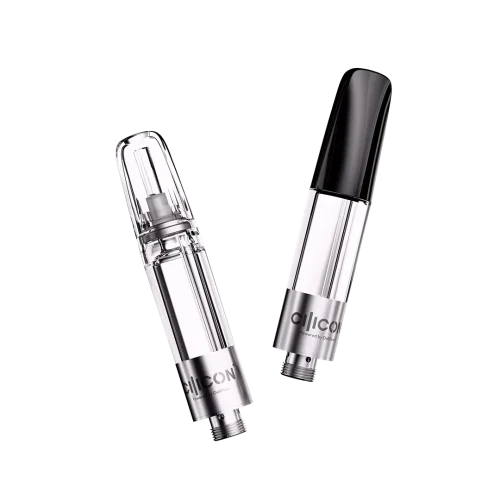
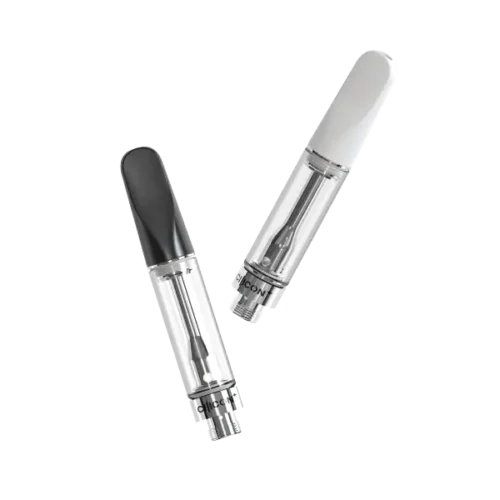
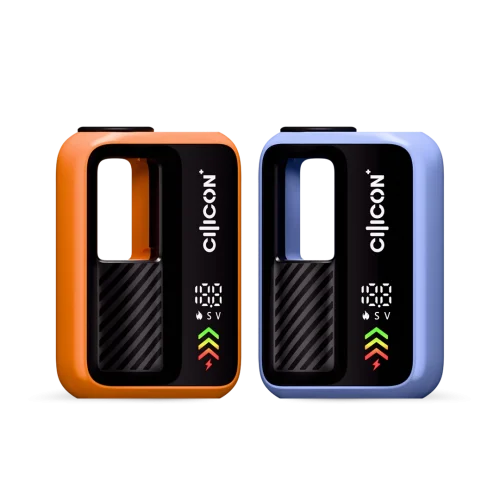
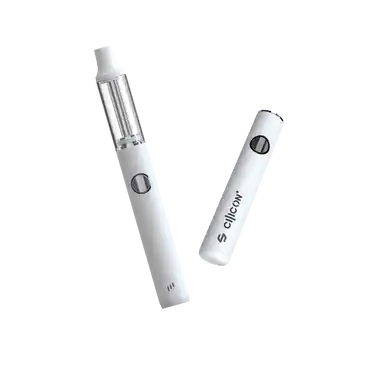
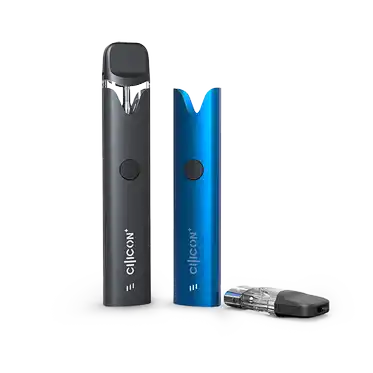
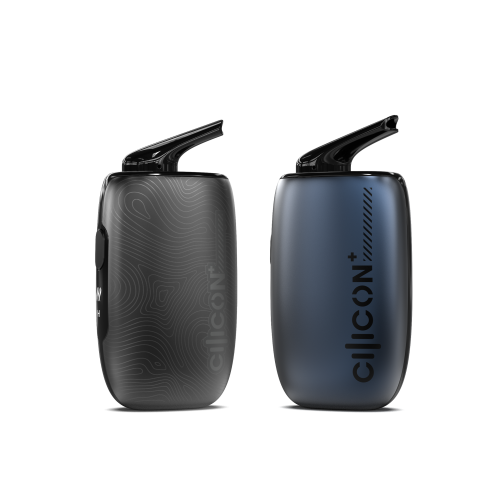
Matching CILICON Technology With Different Oil Types
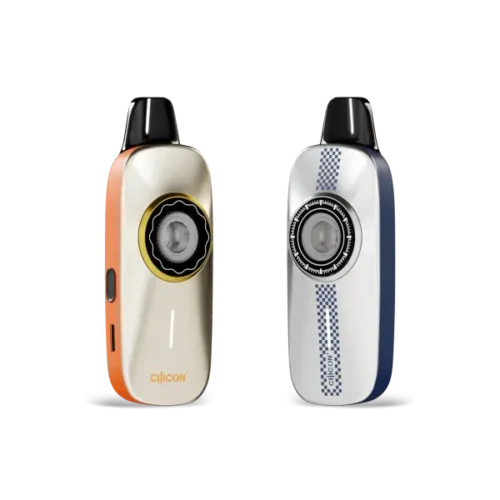
CILICON positions different heating technologies for different formulation and product-development requirements.
DeliFlow® 2.0 heating technology is positioned for live resin and cured-resin applications.
Roscentix™ technology is designed for rosin-focused applications.
DeliFlow® technology is positioned for distillate, blended oils, and other premium-oil applications.
These intended-use categories do not replace validation with the exact production formulation.
Brands can also review CILICON’s:
CILICON supplies empty vape hardware rather than finished oil products.
Responsibility for formulation, filling, testing, labeling, licensing, distribution, and market compliance depends on the supply arrangement and applicable laws. Each party should confirm its obligations before product launch.
Common Misconceptions
Live Rosin and Live Resin Are the Same
They are not the same.
Both categories commonly use plant material preserved soon after harvest, but their production methods are different.
Live resin usually uses solvent-based extraction, while live rosin uses mechanical separation followed by heat and pressure.
Distillate Is Always the Strongest
Distillate is often highly refined, but the name does not establish potency.
The actual cannabinoid concentration and serving information for the finished product should be reviewed before making comparisons.
Solventless Means Risk-Free
Solventless describes the extraction or pressing method.
It does not guarantee that the source material, finished oil, packaging, or device is free from contaminants, formulation problems, or performance risks.
One Cartridge Can Handle Every Oil
Thread size or device format alone does not confirm oil compatibility.
The exact formulation must be validated with the intended:
- Intake design
- Heating system
- Airflow
- Seals
- Battery
- Power profile
- Storage conditions
Frequently Asked Questions
Is Live Rosin Better Than Live Resin?
Neither is universally better.
Live rosin may be the more logical starting point when solventless processing is a central product requirement.
Live resin may be preferred when a brand wants to retain a source-derived aromatic profile through solvent-based extraction.
Compare the actual formulation, laboratory results, price, availability, product positioning, and hardware compatibility.
Is Distillate Stronger Than Live Resin or Live Rosin?
Not necessarily.
Distillate is often highly refined, but the words “distillate,” “live resin,” and “live rosin” do not guarantee a specific cannabinoid percentage.
Actual potency depends on the finished formulation and batch. Review the product label and applicable laboratory results.
What Gets You Higher: Distillate, Live Resin, or Live Rosin?
The concentrate category alone cannot answer this question.
Actual cannabinoid concentration, amount used, formulation, device delivery, tolerance, and individual response can all affect intoxication.
Compare product-specific labeling and laboratory results rather than selecting a product based only on its category.
This information is intended for adults of legal age where lawful. Cannabis can impair reaction time and coordination. Do not drive or operate machinery while impaired.
Are Live Resin or Live Rosin Vapes Healthier Than Distillate Vapes?
Extraction method alone is not enough to determine whether one vape product is safer or healthier than another.
The CDC’s cannabis health guidance notes that cannabis use can involve health risks regardless of how it is used.
Ingredients, contaminants, testing, device performance, usage patterns, and individual health factors also matter.
The term “solventless” should not be interpreted as “risk-free.”
Does Live Resin Contain Butane or Propane?
Live resin is commonly extracted using hydrocarbons such as butane or propane.
However, the category name does not reveal the residual-solvent result for a finished batch.
Review the applicable Certificate of Analysis and jurisdiction-specific testing requirements.
Hydrocarbon extraction should not be attempted outside appropriately licensed, engineered, and code-compliant facilities.
What Is the Difference Between Live Rosin and Regular Rosin?
Live rosin is generally made from hash or trichome material derived from fresh-frozen plants.
Conventional rosin may be pressed from dried flower or cured hash.
Both use heat and pressure, but the starting material and handling before pressing are different. The resulting aromatic and formulation profiles may also vary by batch.
Can the Same Vape Hardware Be Used for All Three Extracts?
Do not assume that the same hardware will perform equally with live resin, live rosin, and distillate.
A device may physically accept multiple oil types while producing different results with each formulation.
Brands should test the exact oil for:
- Flow
- Wicking
- Heating
- Airflow
- Leakage
- Clogging
- Stability
- Material compatibility
- Batch consistency
Conclusion
The main difference between live resin, live rosin, and distillate is how each concentrate is produced.
Live resin generally combines fresh-frozen plant material with solvent-based extraction.
Live rosin generally uses fresh-frozen-derived trichome material, mechanical separation, heat, and pressure without hydrocarbon solvents during pressing.
Distillate undergoes additional refinement and distillation to create a more targeted and relatively neutral cannabinoid fraction.
None of these labels guarantees potency, purity, safety, flavor, or vape-device performance.
Adult consumers should compare product-specific labels, ingredients, and available test results.
Vape brands should evaluate the exact formulation and hardware as one complete system before moving into production.
To discuss a 510 cartridge, AIO device, or rosin-focused OEM/ODM project, contact CILICON with your oil specification, device format, filling requirements, target market, and expected order volume.

Written by:
Dr. Saira Zulfiqar, PharmD
Dr. Saira Zulfiqar is a pharmacist and cannabis expert with more than 15 years of experience. She graduated in 2008 with a Doctor of Pharmacy degree from the University of Punjab, the top-ranking and oldest university in Pakistan. Saira has consulted for and worked with numerous international cannabis, hemp, biomedical, and pharmaceutical companies.
