












How Do 510 Postless Carts Work?
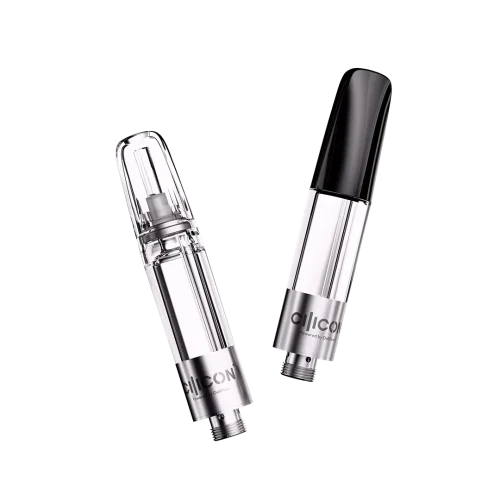
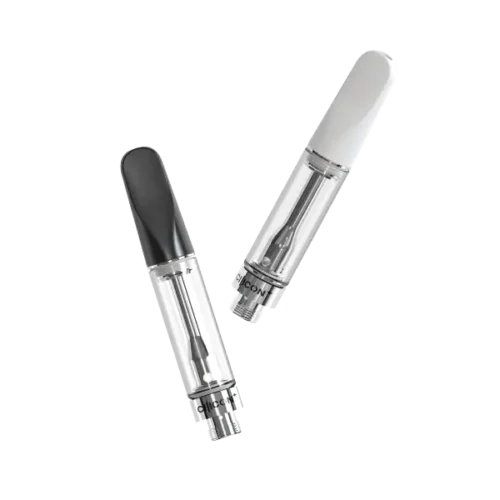
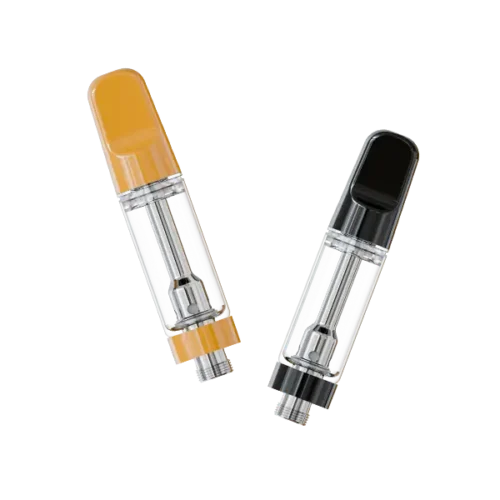
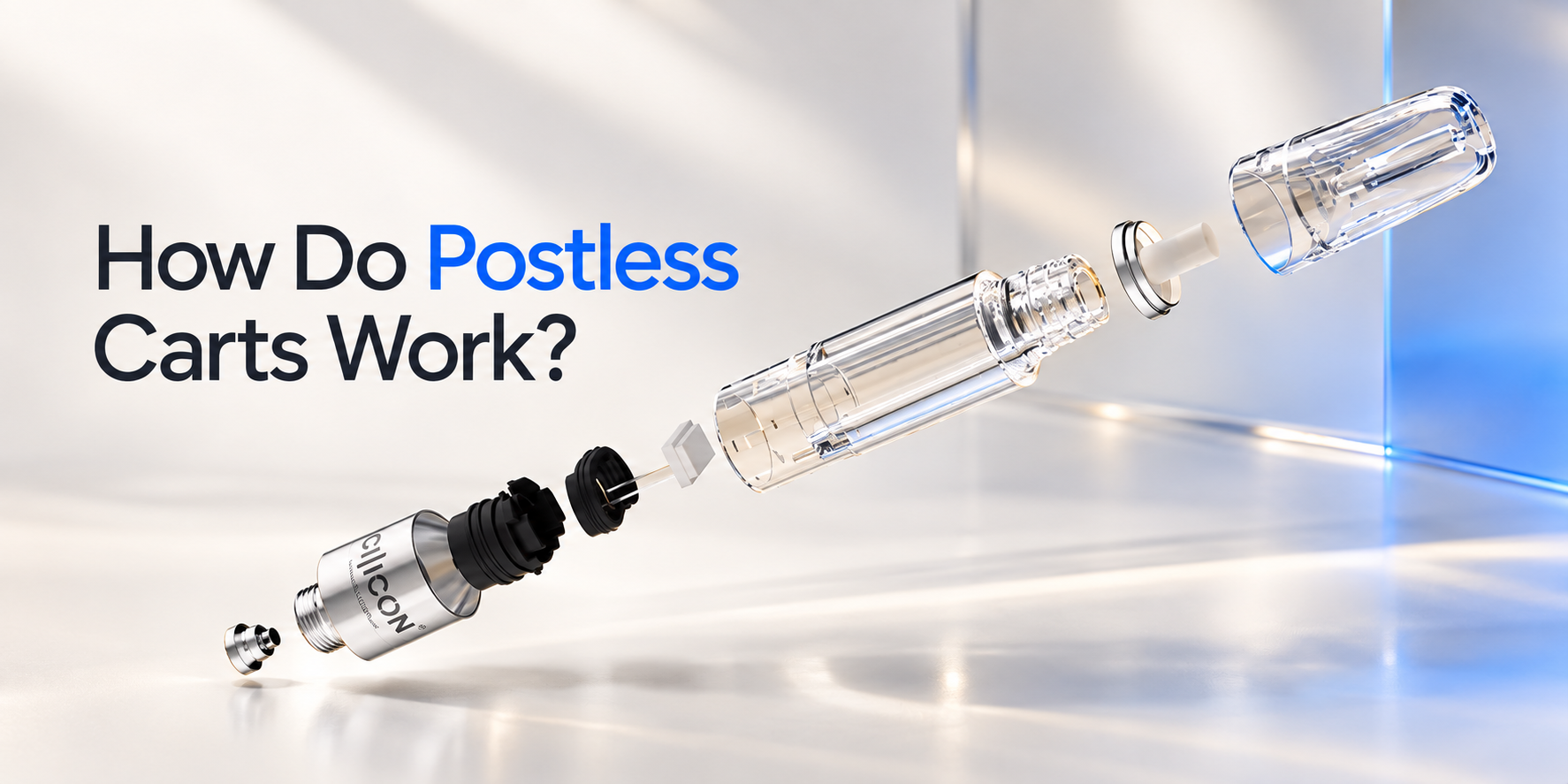
Postless carts work by delivering oil to an electrically powered heating element and carrying the resulting aerosol to the mouthpiece without a traditional center post running through the oil reservoir. The heater and airflow passages remain. What changes is how the reservoir, heater, and aerosol pathway fit together.
To understand a postless vape cartridge, follow three paths: oil moving toward the heater, electricity powering the heater, and air carrying aerosol away. Removing the center post changes the layout of those paths; it does not eliminate their functions.
What does “postless” mean in a vape cartridge?
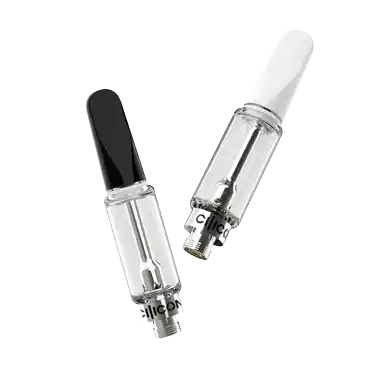
A postless cartridge is a cartridge designed without the traditional center post extending through the main oil chamber. The term describes an internal arrangement, not a particular heating material or a guarantee of performance.
In a familiar center-post cartridge, the visible central assembly surrounds a passage often called the chimney, which carries aerosol toward the mouthpiece. Oil enters the heating area through openings in or around the lower assembly. The liquid-feed openings and the chimney are different parts of the system.
A center-post-free cartridge reorganizes that arrangement. Many designs place the heating region beneath the main reservoir and route airflow through other passages. Exact heater locations, oil-feed interfaces, and channel shapes vary by model.
“Postless” also does not mean the cartridge has no electrical pin. The 510 center pin is a contact at the cartridge’s base. It is separate from the center post that would otherwise extend through the oil chamber.
How the three paths work together
The simplest explanation separates liquid transport, electrical heating, and aerosol transport. These functions interact, but they are not interchangeable.
1. The oil path: reservoir to heating surface
The oil reservoir stores liquid. The heating area needs a continuing supply of that liquid as material at the heated surface vaporizes.
In many postless designs, oil sits above a heater assembly near the bottom of the reservoir. It still passes through the device’s liquid-feed interface to reach the heated surface; removing the post does not mean the oil never moves or that the entire tank is heated at once.
Where porous ceramic is used, its connected microscopic pores can help move liquid toward the heated region. This is a form of capillary action: liquid travels through small spaces because of its interaction with their surfaces. Gravity and pressure differences can also affect delivery.
The important relationship is between the rate of oil supply and the rate of vaporization. If liquid arrives too slowly, the heated region may not remain adequately supplied. If excess liquid reaches the air passage, it can accumulate there. Removing a center post does not automatically balance those rates.
Oil viscosity—how strongly a liquid resists flowing—still matters, along with temperature, pore structure, feed geometry, and pressure balance. A wide-looking reservoir does not reveal all of those details.
2. The electrical path: battery to resistive element
Postless carts still have a heating element. Electrical energy from the battery reaches a resistive component through the cartridge’s contacts and internal connections. Electrical resistance converts that energy into heat.
In a postless ceramic cartridge, ceramic may support the heater, transport liquid, or form part of the heating surface. “Ceramic” does not mean that an ordinary ceramic body generates heat simply because a battery is attached.
A published ceramic atomization-core patent describes heating elements made from either metal wire embedded in porous ceramic or an electrically conductive layer printed onto it. This illustrates why ceramic construction and a conductive heating element can coexist; it does not establish the construction of every postless cartridge.
The electrical circuit also needs a return path. In a typical 510 connection, the center contact and surrounding threaded connection provide separate electrical contacts. That small center contact remains compatible with the description “postless.”
3. The air and aerosol path: inlet to mouthpiece
A postless cartridge still needs a continuous, engineered route from the air inlet to the mouthpiece.
Air enters through the device’s inlet, passes through the heating region, and carries material produced by heating toward the outlet. As vapor cools, some of it condenses into small suspended droplets. The inhaled mixture is therefore described as an aerosol, even though “vapor” is the familiar consumer term.
Without the traditional central chimney through the reservoir, a different passage must connect the heating region to the mouthpiece. Its location and shape depend on the model; a clear center does not tell you where that passage runs.
The oil reservoir is not simply an open replacement chimney. The design must manage liquid delivery while keeping bulk liquid from freely entering the aerosol pathway.
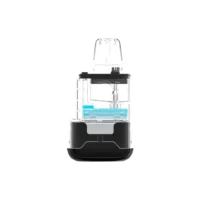
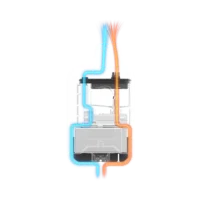
This is why a labeled cross-section is more informative than an exterior product photo: it can show where the air enters, where it meets the heating region, and how aerosol reaches the mouthpiece.
Conceptual flow through the cartridge:
| Path | Functional sequence |
|---|---|
| Oil | Reservoir → liquid-feed interface → heated surface |
| Electricity | Battery contacts → conductive connections → resistive heating element |
| Air and aerosol | Air inlet → heating region → aerosol passage → mouthpiece |
These sequences explain functions, not the physical geometry of every cartridge.
Postless vs. center-post cartridges: what actually changes?
A useful comparison of postless vs. regular carts starts with the internal structure. “Regular” usually means a cartridge with a central post or chimney assembly; it is not a formal performance category.
| Feature | Center-post cartridge | Postless cartridge |
|---|---|---|
| Main reservoir layout | A central assembly occupies part of the chamber. | The traditional reservoir-spanning post is absent. |
| Oil delivery | Often through feed openings near the lower central assembly. | Reorganized around the chosen heater layout; often beneath the reservoir. |
| Aerosol route | Commonly through the central chimney. | Through an alternative engineered passage. |
| Heating element | Still required; materials vary. | Still required; materials vary. |
| Battery connection | May use a 510 interface. | May also use a 510 interface. |
| Clogging and leakage | Depend on the complete design and conditions. | Still depend on the complete design and conditions. |
Removing the post can leave a less obstructed view of the oil and give designers different options for arranging the chamber. It may also change filling access or the space available inside a particular housing.
Those structural changes do not establish that every postless cartridge holds more oil, heats more evenly, or performs better. Alternative channels, seals, and heater supports also take up space. Meaningful performance comparisons require matched products and documented test conditions.
Does postless mean metal-free, cottonless, or wickless?
No. These terms describe different properties.
Postless describes the absence of the traditional center post through the reservoir.
Metal-free is a materials claim whose scope needs clarification. It could refer to a liquid-contact surface, an aerosol path, or the complete assembly. Removing a metal post does not prove that heating components, contacts, or other parts contain no metal. It also does not establish an emissions result.
Cottonless means a specified part of the design does not use cotton. A cartridge can have a center post and still use no cotton, or be postless while using other liquid-management materials.
Wickless commonly indicates the absence of a conventional fibrous wick. It does not necessarily mean the cartridge has no wicking function: porous ceramic can transport liquid without a cotton strand.
Can postless cartridges still clog or leak?
Yes. A postless cartridge can clog or leak because both problems involve more than the presence of a center post.
Clogging means the air or aerosol passage becomes obstructed. Condensation can collect in that passage, and liquid entering it can also restrict flow. Removing the traditional chimney changes the channel arrangement; it does not remove every surface where material can accumulate.
Leaking means liquid escapes a boundary intended to contain it. Relevant factors include seals, assembly tolerances, pressure changes, liquid properties, and the relationship between the reservoir and heating chamber.
The distinction matters. A blocked mouthpiece does not, by itself, identify an oil-feed problem. An external leak does not, by itself, prove the heater is at fault.
Claims such as “clog-resistant” or “leak-resistant” need supporting conditions and test results. The word “postless” alone establishes neither.
Do postless cartridges work with all 510 batteries?
No. A postless 510 cartridge may use the familiar 510 connection, but matching threads alone does not establish complete battery compatibility.
Compatibility includes several separate questions:
- Physical fit: Does the cartridge body fit the battery’s opening, recess, or protective collar?
- Electrical contact: Do the contacts meet correctly without an incompatible protrusion or gap?
- Electrical requirements: Does the battery support the cartridge manufacturer’s specified load and operating range?
- Airflow and activation: Does the connection leave the air inlet clear and work with the device’s activation system?
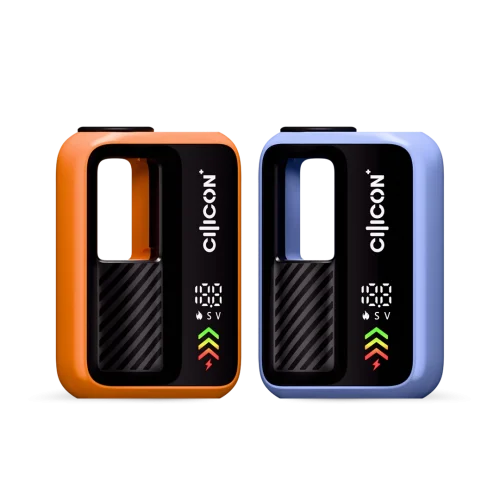
CILICON’s explanation of what a 510 thread battery is provides additional background on the battery side of the system. The specific cartridge and battery documentation should determine compatibility.
How are postless carts different from postless disposables?
A postless cartridge usually connects to a separate battery. A postless all-in-one disposable combines the reservoir, heater, battery, and control components in one device.
“Postless” describes the internal reservoir architecture. “Cartridge” and “all-in-one” describe the product format. The same broad architecture can appear in either format, while the power system and physical connections differ.
An all-in-one device may have a rechargeable battery; that does not establish that its reservoir is refillable. CILICON’s postless disposable vape explainer covers the integrated format.
What to look for in a technical explanation
To understand a specific postless vape cartridge, look for documentation that answers five questions:
- Where is the heating element?
- How does oil reach the heated surface?
- Where does air enter, and how does aerosol reach the mouthpiece?
- Which materials contact the liquid and aerosol?
- What seals and battery requirements does the design specify?
The central idea is straightforward: postless removes a traditional structural component, while oil delivery, electrical heating, and aerosol transport still have to work together. A complete explanation follows those functions instead of treating the label as a performance guarantee.
