













What Is a Dual Mesh Coil? How Dual Mesh Vape Technology Works

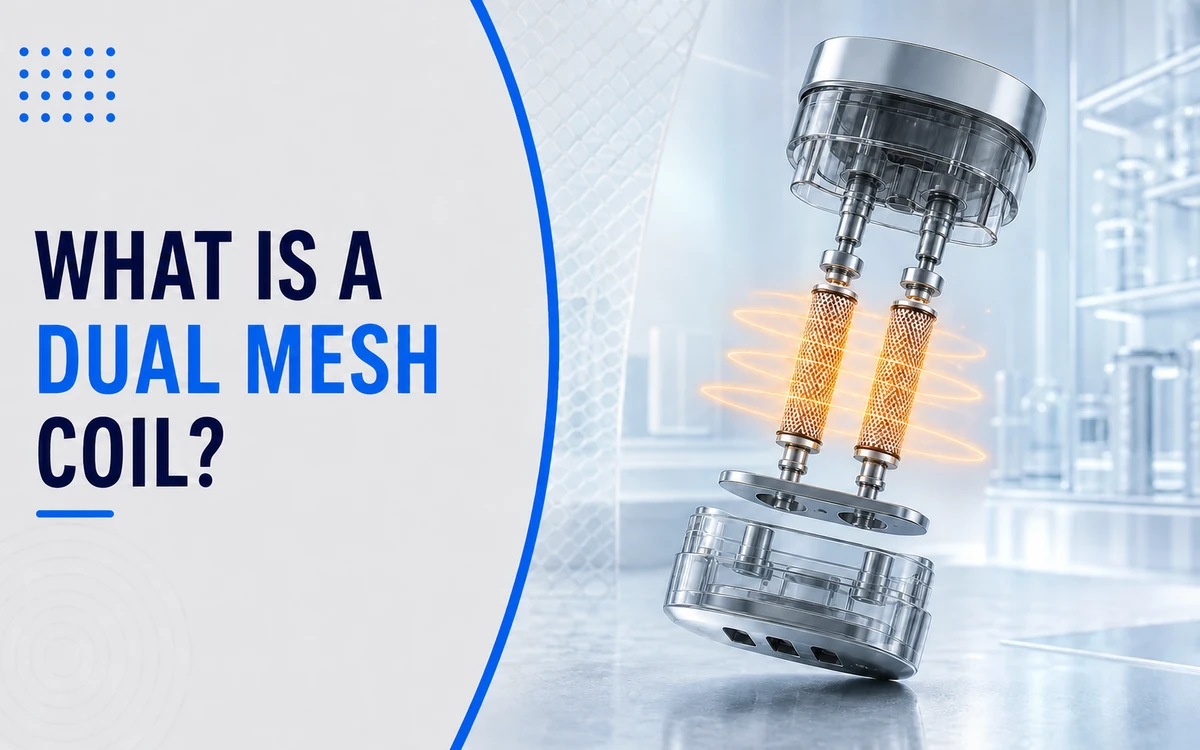
A dual mesh coil uses two mesh-based heating structures, layers, or another manufacturer-defined mesh arrangement within a vape heating system.
Unlike a conventional single-mesh design, dual mesh gives manufacturers more flexibility in how heat is distributed across the heating surface. Depending on the hardware, the two mesh structures may heat together, operate independently, or follow another control pattern.
There is no single standardized dual-mesh architecture across all vape hardware. That means the term describes an important part of the heating system, but it does not by itself determine resistance, wattage, vapor output, flavor, battery use, or coil lifespan.
This guide explains how dual mesh works, where its potential advantages come from, and how it differs from single mesh, dual coil, dual chamber, and ceramic heating.
Quick Answer: A dual mesh coil generally uses two mesh-bearing heating structures or layers instead of one. This can provide more heating area and give manufacturers greater control over heat distribution and firing behavior. However, the actual performance depends on the complete hardware system, including power delivery, airflow, liquid supply, resistance, and control logic.
What Does “Dual Mesh” Mean in a Vape?
Mesh heating uses a thin conductive structure with a perforated or lattice-like surface rather than relying only on traditional round wire.
When electrical current passes through the mesh, resistance generates heat. Liquid supplied by a wick, porous material, ceramic structure, or another delivery system reaches the heated surface and forms aerosol.
For a broader explanation of coil materials, resistance, and heating structures, see Cilicon’s vape coil guide.
In a dual mesh design, two mesh-bearing structures are incorporated into the heating architecture.
How those structures are arranged can vary.
For example, Vaporesso describes its GTX Dual Mesh as using a dual-layer mesh structure, while the VIBE Smart Pod uses two independent mesh coils stacked vertically.
Both can reasonably be described as dual mesh, but their internal architectures are different.
A useful way to think about dual mesh is:
Dual mesh describes a heating architecture that incorporates two mesh-bearing structures or layers. The exact arrangement and control method depend on the specific device.
Does Dual Mesh Always Mean Two Mesh Layers?
No.
Two physical mesh layers are one way to build a dual-mesh heater, but another device may use two separate mesh elements or another documented configuration.
This is why terms such as dual mesh or double mesh should not automatically be treated as detailed engineering specifications.
If the internal structure matters, check the manufacturer’s technical documentation, cross-section, or product specifications.
How Does a Dual Mesh Coil Work?
At a basic level, dual mesh works through the same heating process as other resistive vape heaters:
- Liquid reaches the heating surface.
A wick, porous core, ceramic structure, or another feed system supplies liquid to the heater. - The device applies electrical power.
Draw activation or a button starts the heating cycle. - The mesh heats.
Electrical resistance converts energy into heat across the active mesh surface. - Liquid forms aerosol.
The supplied liquid is heated while airflow carries the aerosol through the device. - The liquid-delivery system recovers.
After each draw, enough liquid must return to the heating interface before the next heating cycle.
What changes in a dual-mesh system is how much heating area is available and how those heating structures are controlled.
A well-designed dual-mesh system can potentially distribute heat across a larger active surface than a comparable single-mesh design. However, that extra heating area is only useful when power delivery, wick contact, liquid supply, and airflow are properly matched.
More mesh does not automatically mean more effective heating.
Do Both Mesh Coils Fire at the Same Time?
Not always.
Dual mesh describes the heating architecture, but it does not tell you exactly how the device controls the two mesh structures.
Some designs may power both meshes at the same time. Others may activate them independently or alternate between them.
The Vaporesso VIBE Smart Pod provides a clear example.
According to the manufacturer, its two vertically stacked mesh coils behave differently depending on the selected mode:
- ECO mode: one mesh operates during each puff, with the system alternating between the two.
- PWR mode: both mesh coils heat simultaneously.
This is different from a dual-layer mesh structure where the two layers may function as part of one integrated heating assembly.
The important point is simple:
Dual mesh does not automatically mean simultaneous firing.
Firing behavior depends on the device’s electrical design and control system.
Are Dual Mesh Coils Better?
Dual mesh can be better when the device is designed to take advantage of it, but mesh count alone does not make a better vape.
The main engineering advantage of dual mesh is that it gives manufacturers more options for managing heating area and heat distribution.
Potential Advantages of Dual Mesh
A well-designed dual-mesh system may provide:
- More active heating area
Two mesh structures can potentially expose more liquid to a controlled heating surface. - More flexible heat distribution
The heating system can be designed to spread thermal load across a larger or differently shaped area. - More firing-control options
Some devices can operate one mesh, both meshes, or different heating modes. - Higher potential aerosol output
When more properly supplied heating area is active, the system may produce more aerosol during a comparable draw. - More consistent heating in some designs
A larger or better-distributed heating surface may help reduce highly concentrated heat zones.
But those advantages depend on the complete system.
Power delivery, liquid supply, airflow, heater geometry, temperature, control logic, and draw duration all influence the final result.
So dual mesh does not automatically mean:
- better flavor;
- more vapor;
- longer lifespan;
- fewer dry hits;
- higher wattage; or
- better overall performance.
The more useful question is:
How well is the dual-mesh heating system engineered as part of the complete device?
Dual Mesh vs. Single Mesh
The basic difference is straightforward:
Single mesh uses one mesh-bearing heating structure, while dual mesh incorporates two mesh-bearing structures or layers.
How much difference that makes depends on the rest of the hardware.
| Factor | Single Mesh | Dual Mesh |
|---|---|---|
| Heating structure | One mesh-bearing structure | Two mesh structures, layers, or another documented arrangement |
| Heating area | Generally simpler | Can provide more active heating area |
| Firing behavior | Usually one heating structure | May support simultaneous, alternating, or other control modes |
| Heat distribution | Depends on mesh geometry | Can give designers more options for distributing heat |
| Vapor output | Depends on power and liquid supply | Can support higher output when more active area is properly supplied |
| Power and liquid use | System-dependent | May increase in higher-output modes |
| Best use | Simpler heating architecture | Designs that benefit from additional heating area or control flexibility |
Resistance and wattage should still be treated as product-specific specifications.
A dual-mesh coil is not automatically higher or lower resistance than a single-mesh coil, and it does not necessarily require more power.
Dual Mesh vs. Dual Coil, Dual Chamber, and Ceramic
These terms are often used together, but they describe different parts of vape hardware.
| Term | What It Describes |
|---|---|
| Dual mesh | The mesh-based heating architecture |
| Dual coil | Two discrete heating coils or elements |
| Dual chamber | Two separate liquid reservoirs or storage chambers |
| Dual-layer mesh | A specific mesh arrangement using two mesh layers |
| Ceramic core / ceramic coil | A heating or liquid-delivery structure involving ceramic |
| Dual flavor / 2 in 1 | A product use case or marketing concept |
The most important distinction is:
Dual mesh is about heating architecture; dual chamber is about storage architecture.
A dual chamber vape contains two separate reservoirs, but that does not tell you what type of heater is used inside.
A dual-chamber device could use:
- mesh heating;
- ceramic heating;
- two separate coils;
- another heating system; or
- a combination of technologies.
Ceramic and mesh are also not necessarily competing technologies.
A device can use a ceramic structure together with mesh heating.
What Resistance and Wattage Does Dual Mesh Require?
There is no universal resistance or wattage range for dual mesh coils.
The correct operating specifications depend on the exact product.
A dual-mesh system may contain multiple heating elements, but the total electrical behavior depends on how those elements are designed, connected, and controlled.
Therefore, adding a second mesh does not automatically:
- halve resistance;
- double resistance;
- double wattage requirements; or
- double power consumption.
When evaluating a dual-mesh coil, pod, cartridge, or fixed device, check:
- Published resistance
- Rated wattage or operating mode
- Exact device compatibility
- Firing behavior
- Liquid-delivery requirements
- Airflow design
Dual mesh alone also does not determine whether a device is intended for MTL, RDL, or DTL use.
Draw style depends on the full combination of airflow, power, chamber geometry, mouthpiece design, and heater configuration.
Real-World Tradeoffs of Dual Mesh
Dual mesh gives designers more heating options, but those options can also affect liquid consumption, battery demand, and usable heater life.
Liquid Consumption
A dual-mesh device may use more liquid when it operates more active heating area or produces more aerosol per draw.
However, liquid consumption is ultimately influenced by:
- operating power;
- puff duration;
- puff frequency;
- airflow;
- liquid supply; and
- firing mode.
A lower-output alternating dual-mesh mode may behave very differently from a mode that activates both meshes simultaneously.
Battery Use
Battery demand mainly depends on the amount of electrical energy required during each activation.
If a dual-mesh mode operates at higher power or activates more heating area, it may consume more battery energy.
But dual mesh itself does not automatically mean faster battery drain.
Control logic, device efficiency, power level, activation time, and battery condition all matter.
Coil Lifespan
Dual mesh does not have a universal lifespan advantage.
A well-designed system may distribute heat more evenly and reduce concentrated thermal stress.
However, heater lifespan can still be affected by:
- deposits on the heating surface;
- insufficient liquid saturation;
- excessive power;
- repeated long draws;
- airflow;
- liquid formulation;
- manufacturing consistency; and
- use pattern.
For refillable hardware, always follow the recommended filling and priming procedure.
Persistent burnt taste, abnormal heat, damaged components, or unstable output can indicate that the heating system should no longer be used.
How CILICON Applies Dual Mesh Technology
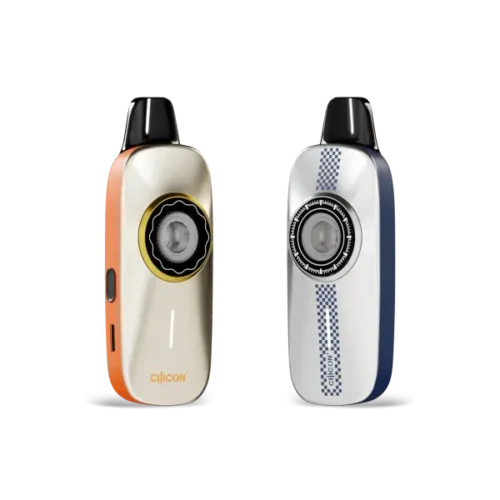
CILICON’s GEMINO shows how dual-mesh heating can be integrated into an all-in-one oil-vape platform.
Rather than treating dual mesh as a standalone feature, GEMINO reflects a system-level approach that considers heating design, oil delivery, airflow, and power control together.
For vape brands, the key is not simply whether a device has “dual mesh,” but how the complete heating system is engineered for the intended oil and use conditions.
CILICON’s DeliFlow 2.0 technology provides more context on this approach to heating and oil delivery.
The Bottom Line
A dual mesh coil generally incorporates two mesh-bearing heating structures or layers within a vape heating system.
Compared with a single-mesh architecture, dual mesh can give manufacturers more heating area and greater flexibility in how heat is distributed and controlled.
But dual mesh is only one part of the complete hardware design.
Actual performance still depends on resistance, power delivery, control logic, liquid supply, airflow, heater geometry, and operating conditions.
That is why dual mesh should not automatically be interpreted as better flavor, more vapor, longer lifespan, or higher power.
The better way to evaluate the technology is to look at how the entire heating system is designed and how the two mesh structures are actually used.

Written by:
Ethan Parker
Hello, I’m Ethan, a content marketing specialist at CILICON, a top-tier cannabis vape manufacturer. My goal extends beyond merely promoting products; it is more importantly about helping people understand and learn about cannabis and vaping, providing them with relevant knowledge and information. Having graduated from University of North Carolina, I cultivated a strong passion and interest in nicotine, cannabinoids, and vape products. At CILICON, I integrate this knowledge and enthusiasm into content creation, sharing interesting and valuable insights.
