




















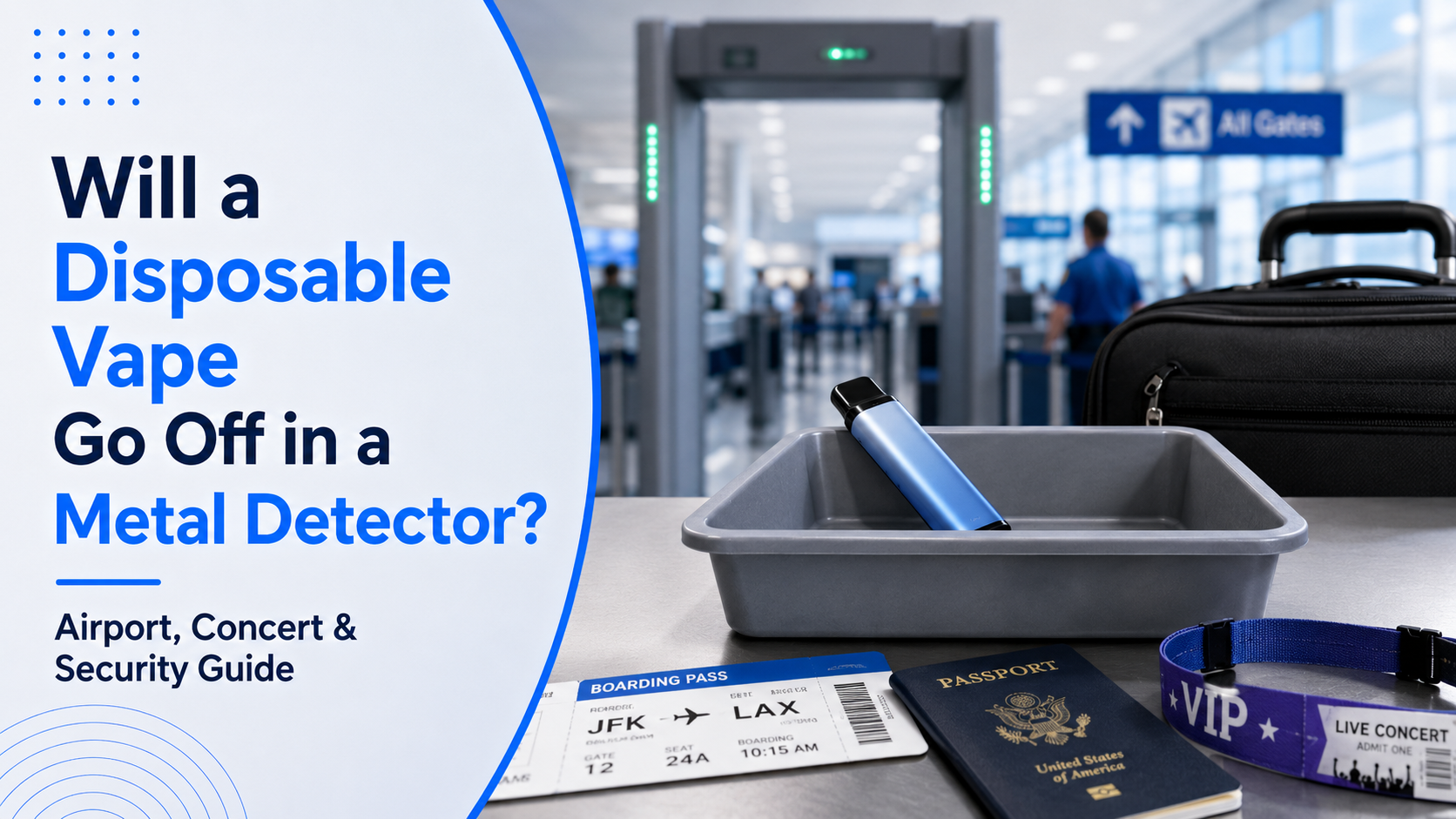
Will a Disposable Vape Go Off in a Metal Detector? Airport, Concert & Security Guide

Yes, a disposable vape can set off a metal detector. Disposable vapes contain a lithium-ion battery, heating coil, wiring and other metal components. However, a vape will not trigger every detector because the result depends on the amount and type of metal in the device, its orientation and the detector’s sensitivity settings.
At an airport, the metal detector is only one part of security screening. Even if a small disposable vape does not trigger the walk-through detector, it may still be visible when a carry-on bag passes through an X-ray scanner.
This guide explains what to expect at airports, concerts, stadiums and other security checkpoints. It is intended to help travelers follow applicable rules—not bypass security screening.
Key Takeaways
- Disposable vapes contain enough metal to be detectable.
- Small devices may not trigger every walk-through metal detector.
- Airport X-ray scanners can still display a vape inside a carry-on bag.
- In the United States, vaping devices must be carried in the aircraft cabin, not in checked baggage.
- A metal detector cannot determine whether a vape contains nicotine, CBD or THC.
- Airport, venue and destination laws still apply even when the device does not trigger an alarm.
- Never conceal a vape or attempt to bypass a security checkpoint.
Why Can a Disposable Vape Trigger a Metal Detector?
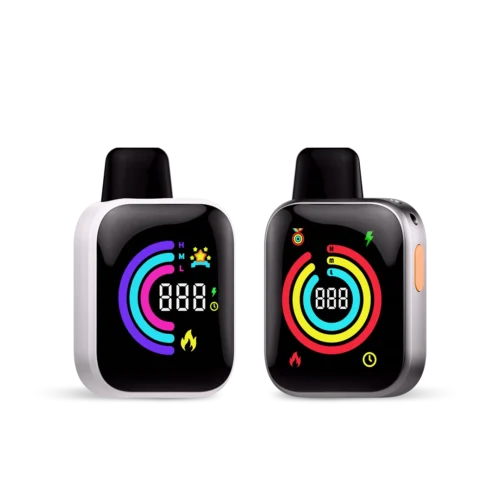
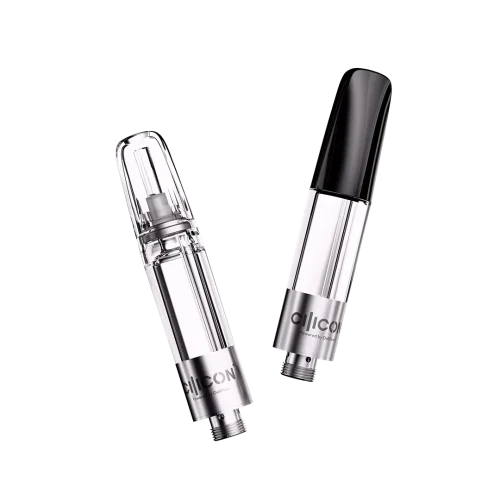
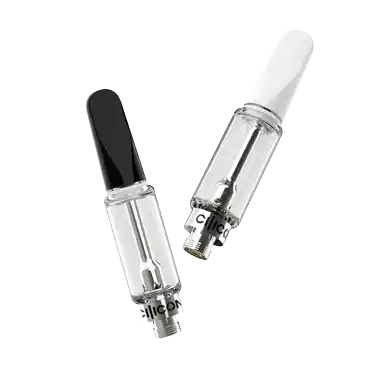
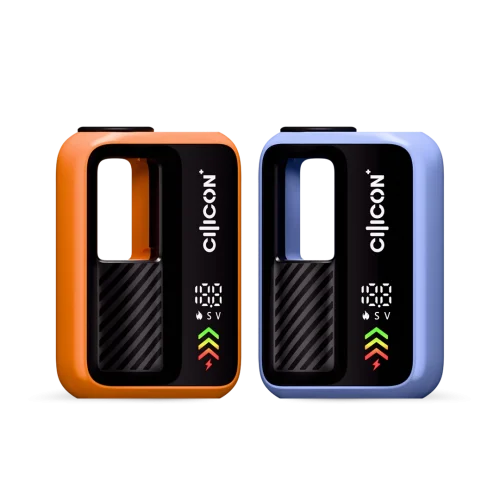
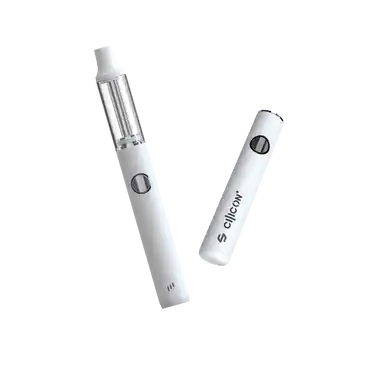
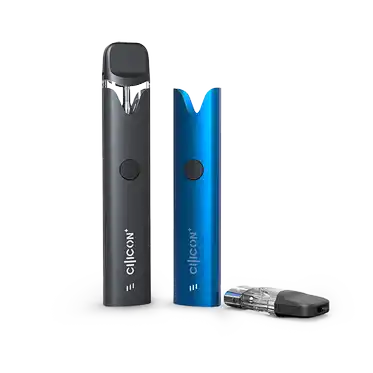
A disposable vape pen may look like a small plastic device, but its internal construction includes several metallic components.
| Vape component | Usually contains metal? | Purpose |
|---|---|---|
| Lithium-ion battery | Yes | Supplies power to the device |
| Heating coil or atomizer | Yes | Heats the oil or e-liquid |
| Circuit board and wiring | Yes | Controls activation and power |
| Charging port | Yes | Allows rechargeable disposables to charge |
| Outer housing | Sometimes | Protects the internal components |
| Oil reservoir | Usually little or no metal | Stores oil or e-liquid |
The battery and heating element are normally the largest sources of detectable metal. Rechargeable disposable vapes may contain additional components, including a USB-C port and a more complex control board.
However, metal detection is not determined by the mere presence of metal. Detector sensitivity, the position of the object and the screening system’s configuration can all affect whether an alarm sounds. Testing standards published through NIST and the National Institute of Justice account for factors such as detector sensitivity and object orientation.
That is why two people carrying similar devices could have different screening experiences.
Will Every Disposable Vape Set Off a Metal Detector?
No. A disposable vape can set off a metal detector, but it is not guaranteed to do so.
Large devices, vape mods and products with metal housings are generally easier to detect than slim devices with lightweight plastic bodies. The detector itself also matters. Some systems are adjusted to detect relatively small metal objects, while others are configured primarily to identify weapons.
The setting can be especially important at busy public venues. CISA’s Public Venue Security Screening Guide explains that walk-through detectors may use single-zone or multi-zone detection. Multi-zone systems can indicate the general part of the body where an alarm originated.
Newer touchless systems may be designed to let visitors keep ordinary objects such as keys and phones in their pockets. That does not mean a disposable vape is guaranteed to pass unnoticed or that the venue allows it.
What Happens in Different Locations?
| Location | Can the vape be detected? | What determines whether it is allowed? |
|---|---|---|
| Airport checkpoint | Yes—through a metal detector, body scanner or carry-on X-ray | TSA, FAA, airline and destination rules |
| Concert or festival | Possibly | Venue policy, local law and detector settings |
| Sports stadium | Possibly | Stadium rules and event security policy |
| Theme park | Possibly | Park rules and local restrictions |
| Courthouse | Likely to receive scrutiny | Court security policy and local law |
| School or university | Possibly | Campus rules, age restrictions and state law |
| International border | Yes | Customs rules and destination-country law |
Passing through a detector without an alarm does not make an item legal or permitted. Security officers may also conduct visual checks, bag searches or secondary screening.
Will TSA Detect a Disposable Vape?
TSA may detect a disposable vape during passenger or baggage screening, but airport screening involves more than a walk-through metal detector.
Depending on the checkpoint, passengers may encounter:
- A walk-through metal detector
- Advanced imaging technology
- Carry-on baggage X-ray screening
- Manual bag inspection
- Secondary screening or a pat-down
A vape stored in a carry-on bag does not pass through the passenger’s metal detector. It passes through baggage-screening equipment instead, where the battery, circuit board and heating assembly may be visible.
TSA also states that an otherwise permitted item may receive additional screening if it triggers an alarm, appears to have been altered or raises another security concern. The final checkpoint decision rests with the TSA officer. See the official TSA “What Can I Bring?” guidance.
Can You Bring a Disposable Vape on a Plane?
In the United States, electronic cigarettes and vaping devices must be carried in the aircraft cabin. They are not permitted in checked baggage because their lithium batteries present a potential fire risk.
The Federal Aviation Administration advises passengers to:
- Keep vaping devices in carry-on baggage or on their person.
- Protect devices from accidental activation.
- Protect exposed batteries and terminals against short circuits.
- Remove vaping devices from a carry-on bag if that bag is checked at the gate.
- Avoid charging or using the device aboard the aircraft.
If you accidentally put a vape in checked luggage, tell airline staff before the bag is loaded. For more detail, read CILICON’s guide to vapes in checked luggage.
Individual airlines and destination countries may impose additional restrictions. Always check both before traveling.
Can a Metal Detector Tell Whether a Vape Contains THC?
No. A metal detector cannot determine whether a disposable vape contains nicotine, CBD, THC or another substance.
Metal detectors respond to metallic components. They do not analyze the chemical contents of a vape cartridge or oil reservoir. An airport X-ray can display the device’s physical components, but it does not automatically identify the formulation inside it.
That does not mean a THC vape is legally safe to carry.
TSA says its screening procedures focus on aviation security rather than searching for marijuana. However, if officers discover a substance that appears to violate the law, they must refer the matter to the appropriate authorities. Under federal rules, marijuana and many cannabis-infused products remain illegal, with limited exceptions for certain products containing no more than 0.3% delta-9 THC by dry weight or approved by the FDA. See the current TSA cannabis guidance.
Local possession laws, federal law and destination-country laws may all affect the outcome. A state medical cannabis card does not automatically protect a traveler in every airport or jurisdiction.
Will a Vape Set Off a Metal Detector at a Concert?
It might. Concerts, festivals and stadiums use different screening systems and sensitivity settings.
CISA notes that some high-throughput screening systems are designed to ignore small everyday metal objects. Traditional walk-through detectors may be more sensitive, and multi-zone systems can identify the approximate location of an alarm.
Security staff may also:
- Inspect bags
- Ask visitors to empty their pockets
- Use handheld metal detectors
- Conduct visual inspections
- Enforce a separate tobacco or vaping policy
A concert may prohibit vaping devices even when local law allows possession. Some venues permit nicotine vapes but prohibit cannabis products; others ban all smoking and vaping products.
Check the venue’s prohibited-items page before leaving home. If vapes are not permitted, leave the device behind rather than attempting to conceal it.
How to Carry a Disposable Vape Through Airport Security Legally
If your device and its contents are legal at both your origin and destination, use the following procedure:
1. Check the destination’s laws
Cannabis, nicotine and flavored-vape regulations vary between states and countries. Confirm the law at every destination and connection point.
2. Review airline rules
Airlines can impose conditions beyond general TSA and FAA requirements.
3. Put the vape in your carry-on
Do not place a disposable vape in checked baggage. If a carry-on bag is checked at the gate, remove the vape first. The FAA specifically requires passengers to keep electronic cigarettes and vaping devices in the cabin.
4. Prevent accidental activation
Turn off devices that have a power button. Use a protective case and keep the device away from keys, coins and other objects that could damage it or cause a short circuit.
5. Keep it accessible
Packing the device neatly makes it easier to remove if a security officer requests an inspection.
6. Answer questions honestly
Do not conceal, disguise or modify the vape. Follow the instructions provided by security personnel.
7. Never use or charge it onboard
Vaping and charging vaping devices are prohibited aboard aircraft.
What Happens If Your Vape Triggers an Alarm?
An alarm does not automatically mean the vape will be confiscated.
Security personnel may ask you to:
- Remove metal objects from your pockets.
- Pass through the detector again.
- Show the device to an officer.
- Allow a bag or device inspection.
- Complete secondary screening.
If the device is legal and permitted under the location’s rules, you may be allowed to continue with it. If the venue bans vapes, the contents are illegal, or the device raises a safety concern, it may be refused or referred to law enforcement.
Trying to hide the device is more likely to create additional problems than carrying and declaring it correctly.
Frequently Asked Questions
Do vapes go off in metal detectors?
Vapes can go off in metal detectors because they contain a battery, heating coil, wiring and electronic components. Whether an alarm sounds depends on the vape and the detector’s sensitivity.
Will an Elf Bar or Geek Bar set off a metal detector?
It may. Brand and model affect the amount of metal in a device, but no manufacturer can guarantee that its vape will not trigger a particular security system.
Do disposable vapes show up on airport X-rays?
Yes. A baggage X-ray can display the battery, heating assembly, circuit board and other internal parts of a disposable vape.
Can TSA tell if a disposable vape contains THC?
A metal detector cannot distinguish THC from nicotine. However, TSA officers may inspect a device, and suspected violations can be referred to law enforcement.
Can I put a disposable vape in checked luggage?
No. In the United States, the FAA requires electronic cigarettes and vaping devices to remain in the aircraft cabin because they contain lithium batteries.
Can a disposable vape be carried in hand luggage?
Generally, yes, under U.S. battery-safety rules, provided the device and its contents are otherwise legal. Airline and destination rules may be more restrictive.
Will an empty disposable vape trigger a metal detector?
It can. An empty vape still contains its battery, coil, wiring and other metal components.
Will a disposable vape trigger a body scanner?
It may be detected as an object on the body. Airport body scanners and metal detectors use different technologies, so travelers should remove items from their pockets as instructed.
Can I take a vape into a concert or stadium?
That depends on venue policy. Check the event’s prohibited-items list before arrival; a venue can ban vaping devices even when possession is otherwise legal.
Final Answer
A disposable vape can go off in a metal detector because it contains several metallic and electronic components. Small devices may not trigger every detector, but there is no reliable way to predict the result.
At airports, the more important point is that passenger screening also includes body scanners, carry-on X-rays and possible manual inspection. Carry legal vaping devices in the cabin, protect them against accidental activation and never place them in checked luggage.
For cannabis brands developing reliable all-in-one hardware, explore CILICON’s empty disposable vape solutions.
This article is intended for adults and provides general travel and security information, not legal advice. Regulations and venue policies can change; verify current rules before traveling.

Written by:
Ethan Parker
Hello, I’m Ethan, a content marketing specialist at CILICON, a top-tier cannabis vape manufacturer. My goal extends beyond merely promoting products; it is more importantly about helping people understand and learn about cannabis and vaping, providing them with relevant knowledge and information. Having graduated from University of North Carolina, I cultivated a strong passion and interest in nicotine, cannabinoids, and vape products. At CILICON, I integrate this knowledge and enthusiasm into content creation, sharing interesting and valuable insights.
Pre: x
